Product Trends 2025–2026: What’s Really Changing
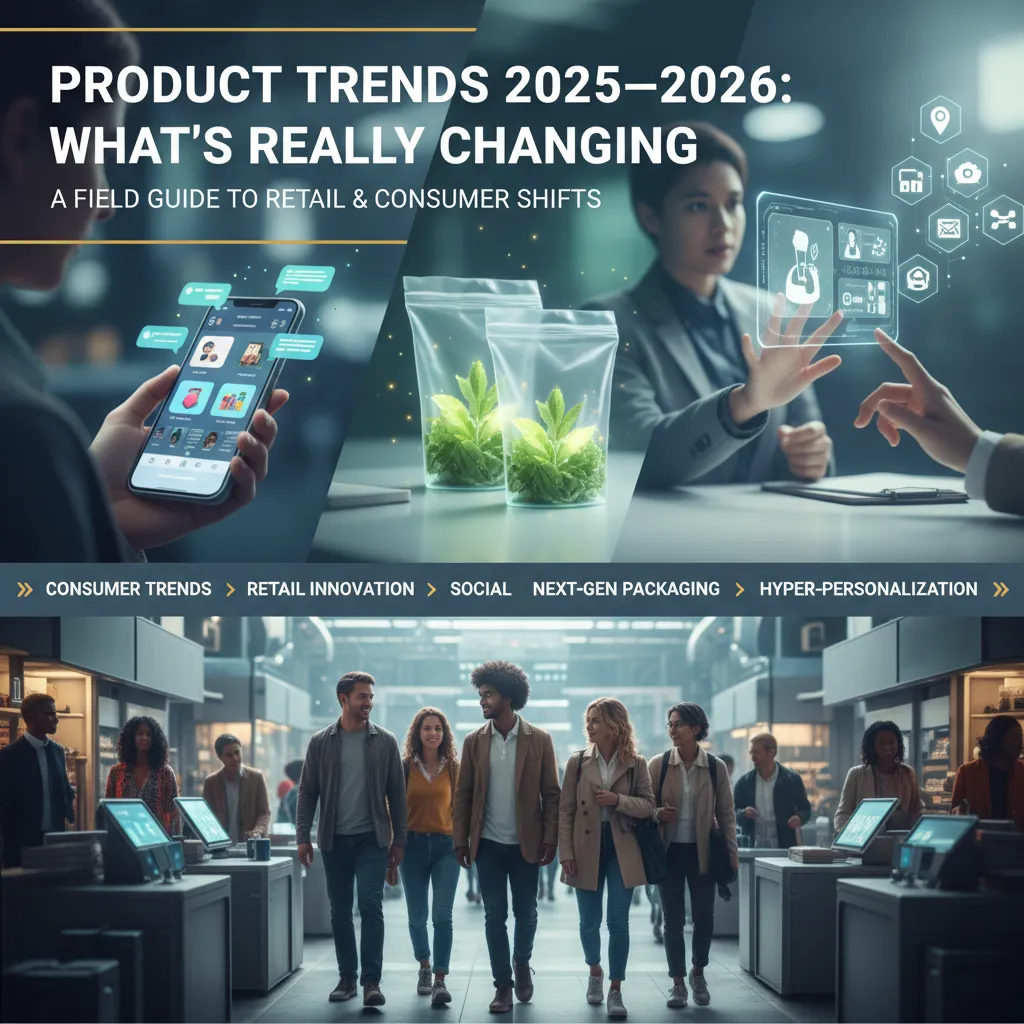
Last month I watched a friend compare three nearly identical shampoos in a drugstore aisle—then buy the cheapest one… and immediately scan a QR code on the shelf to see if it was “clean.” That little moment felt like 2026 in miniature: price pressure, values-driven purchases, and tech nudging decisions in real time. This post is my messy notebook of what’s changing in product trends 2025–2026—part market research insights, part on-the-ground observations, with a couple tangents I couldn’t resist.
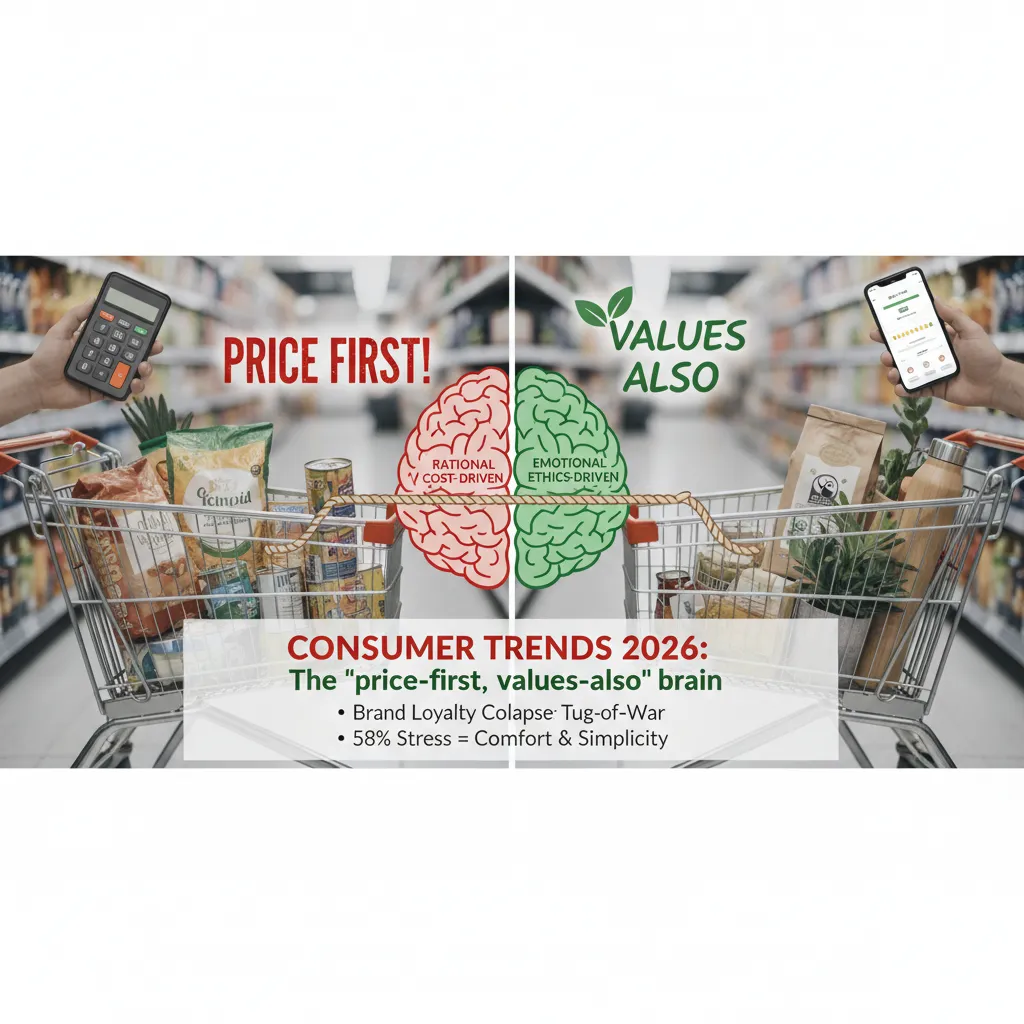
1) Consumer Trends 2026: The “price-first, values-also” brain
Why brand loyalty collapse is the new baseline (and how I see it in my own cart)
In 2026, I don’t treat brand loyalty like a default setting anymore. I treat it like a nice-to-have that has to be earned every single purchase. When prices move fast and options are endless, my cart becomes a live comparison tool: I check unit price, scan reviews, and swap brands without guilt. That’s why I see “loyalty collapse” as the new baseline in Product Trends 2025–2026: What’s Really Changing: shoppers aren’t less caring, they’re more adaptive. If a store brand meets the same need, I’ll take it. If a premium brand can’t explain the extra cost in one sentence, I move on.
Value-conscious shopping meets values-driven purchases: the internal tug-of-war
At the same time, I’m not shopping on price alone. I still want products that match my values—cleaner ingredients, less waste, fair labor, local when possible. The tension is real: my brain says save money, but my conscience says buy better. So I make trade-offs. I’ll pay more for a refill system that actually reduces packaging, but I won’t pay more for vague “eco” claims. In practice, “values-also” means I’m looking for proof, not slogans.
- Price-first: I start with affordability and total cost.
- Values-also: I upgrade when the impact is clear and the benefit is specific.
- Trust signals: transparent labels, real certifications, and plain-language sourcing.
What 58% daily stress does to product choices (comfort, simplicity, fewer decisions)
When daily stress is this common (I often hear the “58%” figure cited in consumer discussions), it changes what wins at the shelf and on the screen. Under stress, I don’t want a complicated product or a complicated decision. I want comfort, predictability, and fewer steps. That’s why I’m drawn to simple bundles, auto-replenish, and products that reduce mental load—like one-pan meals, all-in-one personal care, and “works every time” basics.
When I’m stressed, I don’t shop for the best option. I shop for the easiest safe option.
Sidebar: my ‘two-minute checkout test’ for frictionless shopping
If checkout takes longer than two minutes, I’m more likely to abandon the cart. Here’s my quick test:
- Can I see total cost (shipping + tax) before I commit?
- Is there guest checkout without forced account creation?
- Do payment options include a fast method (card wallet, saved pay)?
- Are delivery dates clear, not hidden behind extra clicks?
If the answer is “no” twice, I leave. In 2026, friction is a competitor.
2) Shopping Trends: Social Commerce grows up (finally)
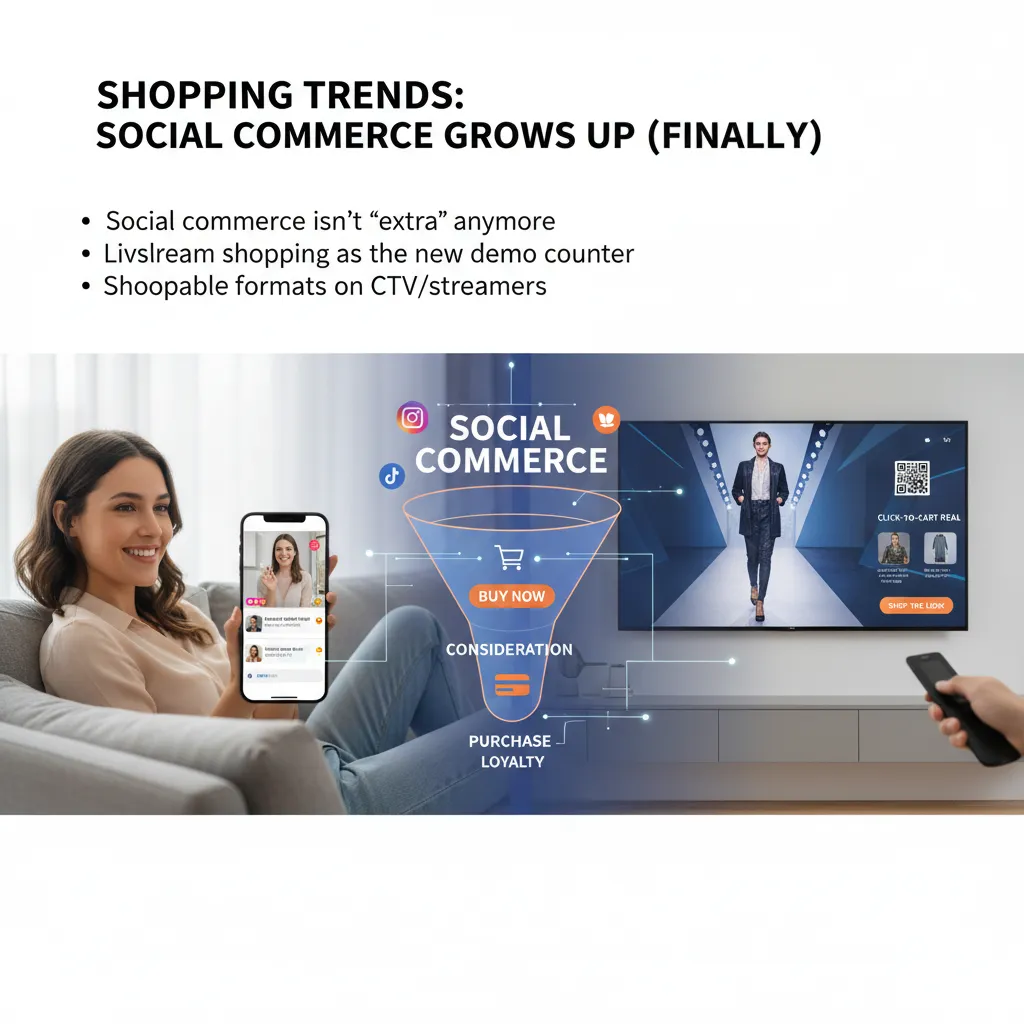
In 2025–2026, I don’t see social commerce as a “nice-to-have” channel anymore. When budgets are tight, it earns its place because it can do discovery + proof + purchase in one flow. Instead of paying for awareness and then paying again to “convert later,” social commerce lets me shorten the funnel and measure results faster.
Social commerce isn’t “extra” anymore
When I map the funnel today, social commerce sits in the middle and the bottom at the same time. It’s where people first hear about a product, and also where they decide if it’s worth buying right now. That matters when every dollar needs to show impact.
- Top of funnel: short videos and creator posts create fast reach.
- Mid-funnel: comments, stitches, and Q&A act like live reviews.
- Bottom of funnel: shoppable posts reduce steps and drop-off.
Livestream shopping = the new demo counter
I think livestream shopping works because it matches how tired brains shop. People don’t want to read long pages after work. They want to see it used, hear simple answers, and feel like someone is guiding them. A good live is basically the old in-store sample table, but scaled.
“Show me, answer me, let me buy without thinking too hard.”
What makes lives convert is the mix of real-time proof (texture, size, taste reactions) and real-time urgency (limited bundles, timed drops). It’s not hype; it’s a clearer demo.
Shoppable CTV/streamers make “click-to-cart” real
The big shift I’m watching in marketing trends 2026 is shoppable formats on CTV and streaming platforms. When a viewer can scan, click, or add-to-cart from the couch, the line between “ad” and “store” gets thinner. For brands, that means creative needs to behave like a product page: show the item, show the benefit, show the price, and make the next step obvious.
Mini-scenario: launching a snack brand with $5k and a phone
- $1,500: small inventory + simple packaging that reads well on camera.
- $1,000: creator seeding (10–15 micro-creators) with clear talking points.
- $800: one weekly livestream demo: taste test, “what’s inside,” bundle offer.
- $1,200: paid boosts on the best-performing shoppable clips.
- $500: landing + checkout basics (fast load, 3-bundle options, subscription).
3) Retail Trends 2026: Retailer Trends 2026 and the hunt for ‘Retail DNA’
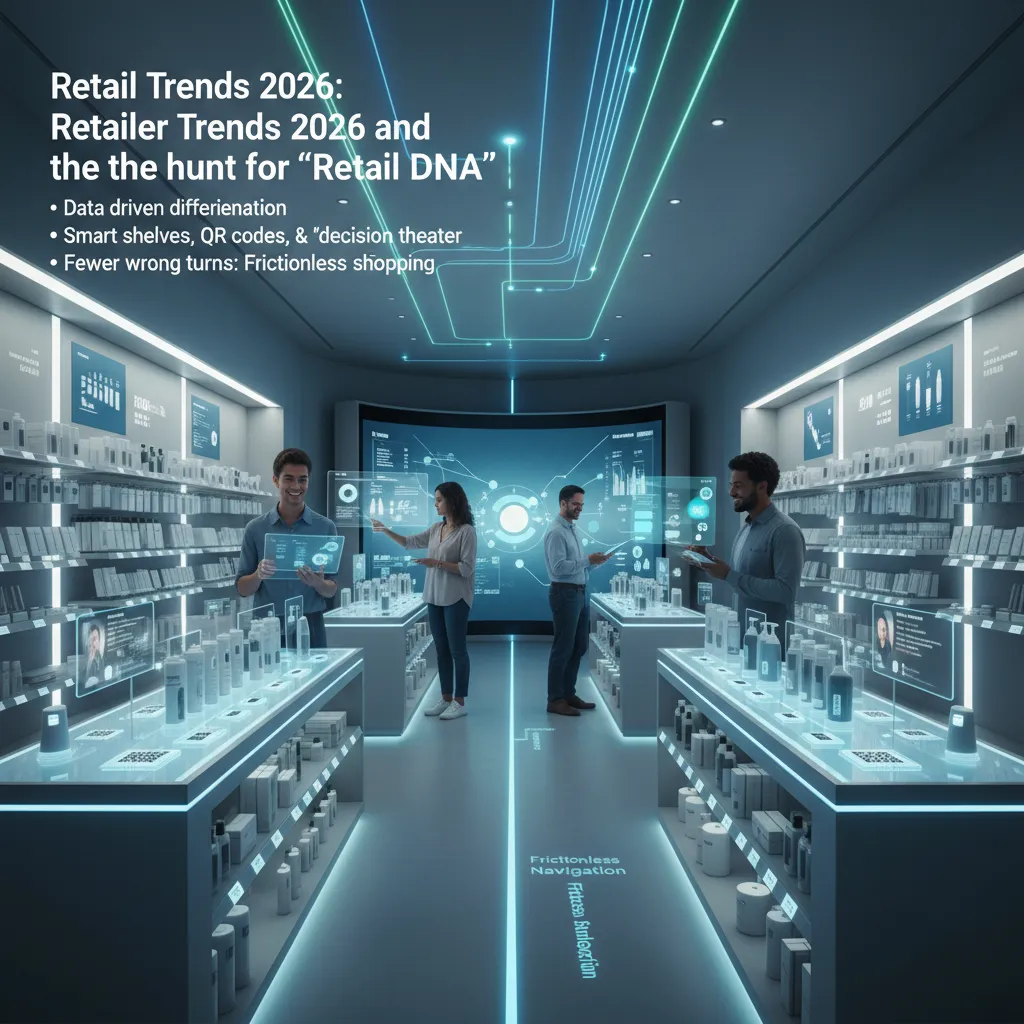
In my notes on Product Trends 2025–2026: What’s Really Changing, one theme keeps repeating: products are starting to look and feel the same. Same ingredients, same claims, same “clean” design language. That’s why Retail Trends 2026 are less about stocking “new” items and more about finding a store’s Retail DNA—the unique way a retailer helps me choose, trust, and buy.
Data-driven differentiation when products look identical
When every shelf is full of near-clones, retailers compete with data-driven differentiation. Not just loyalty points, but real signals that shape the assortment and the experience. I’m seeing retailers use purchase history, local demand, and even return reasons to decide what gets featured and what gets removed.
- Assortment clarity: fewer duplicates, more “best choice” options.
- Personalized value: offers tied to habits, not random discounts.
- Trust cues: showing why an item is recommended (diet, budget, ratings).
Smart shelves, QR codes, and the in-aisle “decision theater”
The aisle is becoming a decision theater. Instead of pushing me to research at home, the store brings the comparison tools to the shelf. Smart shelves can highlight stock levels, price changes, or “popular right now” signals. QR codes are evolving too: less marketing, more utility.
What I expect to see more of in 2026:
- QR codes that open simple comparison views (size, unit price, allergens).
- On-shelf prompts like “If you liked X, try Y” based on real baskets.
- Short, clear product explainers—not long brand videos.
Frictionless shopping is fewer wrong turns (literally)
Frictionless shopping isn’t only about skipping checkout. It’s also about reducing the small failures that waste time: walking to the wrong aisle, missing a deal, or realizing too late that an item doesn’t fit my needs. Better store maps, app-based aisle guidance, and cleaner category layouts matter as much as scan-and-go.
In 2026, “fast” retail will mean fewer decisions that feel like guesswork.
Small tangent: the best store I visited in 2025 had… fewer signs
It surprised me, but the best store experience I had in 2025 used less signage, not more. The layout did the teaching. Categories were grouped the way people actually shop, and the shelf labels were consistent and calm. That’s Retail DNA in action: a store that doesn’t shout—yet still guides me to the right choice.
4) Brand Manufacturer Trends: Hyper Personalization without being creepy
In 2025–2026, I’m seeing brands move from “personalized” (a first-name email and random picks) to hyper personalization and hyper-segmentation that actually helps. The big change is intent: the best brands use data to remove friction, not to show off how much they know about me.
Hyper personalization and hyper-segmentation: what’s actually useful in 2026
Useful personalization in 2026 is quiet and practical. It shows up as better timing, fewer irrelevant choices, and smoother reorders. Hyper-segmentation means brands stop treating “women 25–34” as a segment and start grouping people by real behavior: refill cycles, skin sensitivity, budget limits, or preferred formats.
- Context-based recommendations (season, location, usage patterns) instead of “people also bought.”
- Preference memory that sticks across channels (site, app, store) without asking me again.
- Smarter bundles based on what I actually finish, not what looks good in a promo.
- Accessibility-aware defaults like font size, captions, or low-scent options.
AI orchestrated systems + data driven insights: the behind-the-scenes stack
What’s powering this shift is an AI-orchestrated stack that connects product, marketing, and support. I think of it as a “decision layer” that chooses the next best action without blasting me with messages.
| Layer | What it does |
|---|---|
| Data signals | Purchases, browsing, returns, support tickets, and consented preferences |
| Identity + consent | Links devices and channels while respecting opt-ins and privacy settings |
| AI decisioning | Predicts needs (like replenishment) and selects the best message or offer |
| Activation | Delivers it via email, SMS, app, in-store screens, or support scripts |
When brands do this right, personalization feels like service, not surveillance.
Community engagement is the new “loyalty program” (because points feel bland)
Points and tiers are losing energy. What’s replacing them is community: early access for contributors, feedback circles, creator-led tutorials, and member-only product testing. I’m more likely to stay loyal when I feel heard, not “managed.”
My personal rule: if personalization needs my patience, it’s not personalization.
If I have to correct recommendations, close pop-ups, or repeat preferences, the brand isn’t personalizing—it’s outsourcing work to me.
5) Sustainable Packaging to Next Generation Packaging (and a dash of Circular Commerce)
Sustainable packaging becomes a material science race
In 2025–2026, I’m seeing “sustainable packaging” stop being a marketing claim and start becoming a materials competition. Brands can’t just say “eco-friendly” anymore; they have to prove lower impact with better inputs, cleaner chemistry, and real end-of-life outcomes. The shift feels practical: lighter packs, fewer mixed materials, and designs that work in the waste systems people actually have.
What’s changing is the expectation of evidence. I’m noticing more pressure for clear labeling, third-party certifications, and packaging specs that can be audited. It’s less about a green color palette and more about measurable performance.
Next generation packaging: edible, dissolvable, compostable
This is the part that excites me most—and also worries me. Edible films, dissolvable pods, and compostable formats are moving from “cool prototype” to real pilots. When it works, it can cut plastic use and reduce shipping weight.
- Edible: Great for single-serve items, but I worry about hygiene, allergens, and consumer comfort.
- Dissolvable: Promising for concentrates and refills, but it must dissolve safely and not create new water issues.
- Compostable: Useful in closed systems, but confusing when people don’t have access to industrial composting.
My biggest concern is “compostable” becoming the new vague claim. If it only composts under specific conditions, the packaging needs to say that in simple language.
A dash of circular commerce (and where it breaks)
Circular commerce is showing up through returns, refills, resale, and repairs. I like the idea because it connects packaging to a longer product life, not just a single unboxing moment. But it breaks when the system is hard to use: high return shipping emissions, refill stations that aren’t nearby, or repair programs that cost more than replacement.
In practice, the winners make circular options default-easy:
- Simple deposits and instant credits
- Standardized refill formats
- Clear cleaning and safety rules
Wild-card analogy: packaging as a “passport”
I keep thinking of next generation packaging as a passport: it should prove where materials came from, how they were made, and whether they support ethical sourcing and regenerative inputs.
“The best packaging won’t just protect the product—it will verify the story.”
That’s why I expect more QR codes and digital IDs that link to sourcing, certifications, and end-of-life instructions people can actually follow.
6) Convenience Product Trends: Service Based Products and the comfort economy
Service-based products: subscriptions, refills, warranties, and “I’ll pay to not think”
In 2025–2026, I see convenience shifting from “a nice feature” to the main product. More brands are selling service-based products that remove small decisions: subscriptions that auto-ship, refill programs that predict usage, and warranties that feel like ongoing support instead of fine print. The real trend is the mindset: I’ll pay to not think. When people are tired, busy, or managing tight budgets, they choose offers that reduce planning, shopping, and risk. That’s why “set it and forget it” bundles are growing across home care, personal care, pet supplies, and even basic electronics.
Comfort as product design: fewer steps, calmer interfaces
The comfort economy is not only about soft blankets and cozy lighting. It’s also about product design that feels calm. I’m watching teams remove steps, shorten forms, and simplify choices. Interfaces are getting quieter: fewer pop-ups, clearer defaults, and less pressure to upgrade every minute. Even physical products are designed for comfort—easy-open packaging, clearer labels, and refill systems that don’t require tools or extra parts. In my view, the winning products in 2026 will feel like they respect my attention.
Private label growth meets service: value chains bundle convenience
Another change is how private label brands are moving beyond “cheap alternatives.” Retailers now control shelves, data, and delivery, so they can bundle convenience into the value chain: store-brand refills, members-only warranties, and subscription discounts that lock in repeat purchases. This is where service becomes a moat. If a retailer can offer the same quality plus easier replenishment, many shoppers won’t search elsewhere. Convenience becomes the reason to stay, not just the price.
Closing loop: how I’d sanity-check a 2026 product idea in one weekend
To close this trend report, here’s how I’d test a 2026 convenience idea fast. On Saturday, I’d write a one-sentence promise: “This saves you time because ____.” Then I’d build a simple landing page and run a small ad or share it in a relevant community to see if people click and sign up. On Sunday, I’d interview 5–10 potential users and ask what they want removed: steps, choices, or worry. If they describe relief—and they’re willing to pre-order, subscribe, or pay for a warranty—I know the idea fits the comfort economy and the service-based product trend shaping 2025–2026.
TL;DR: Product trends 2025–2026 are being shaped by economic pressures, collapsing brand loyalty, and shoppers who expect both affordability and meaning. Social commerce and shoppable formats expand fast (17% of online sales via social by 2026; U.S. livestream shopping ~$70B), while retailers lean into data-driven differentiation and frictionless shopping. Packaging goes “next generation” (compostable, dissolvable, even edible), and brands experiment with circular commerce and service-based products to stay relevant.


Comments
Post a Comment