Automation Trends 2025–2026: The Shift Is Real
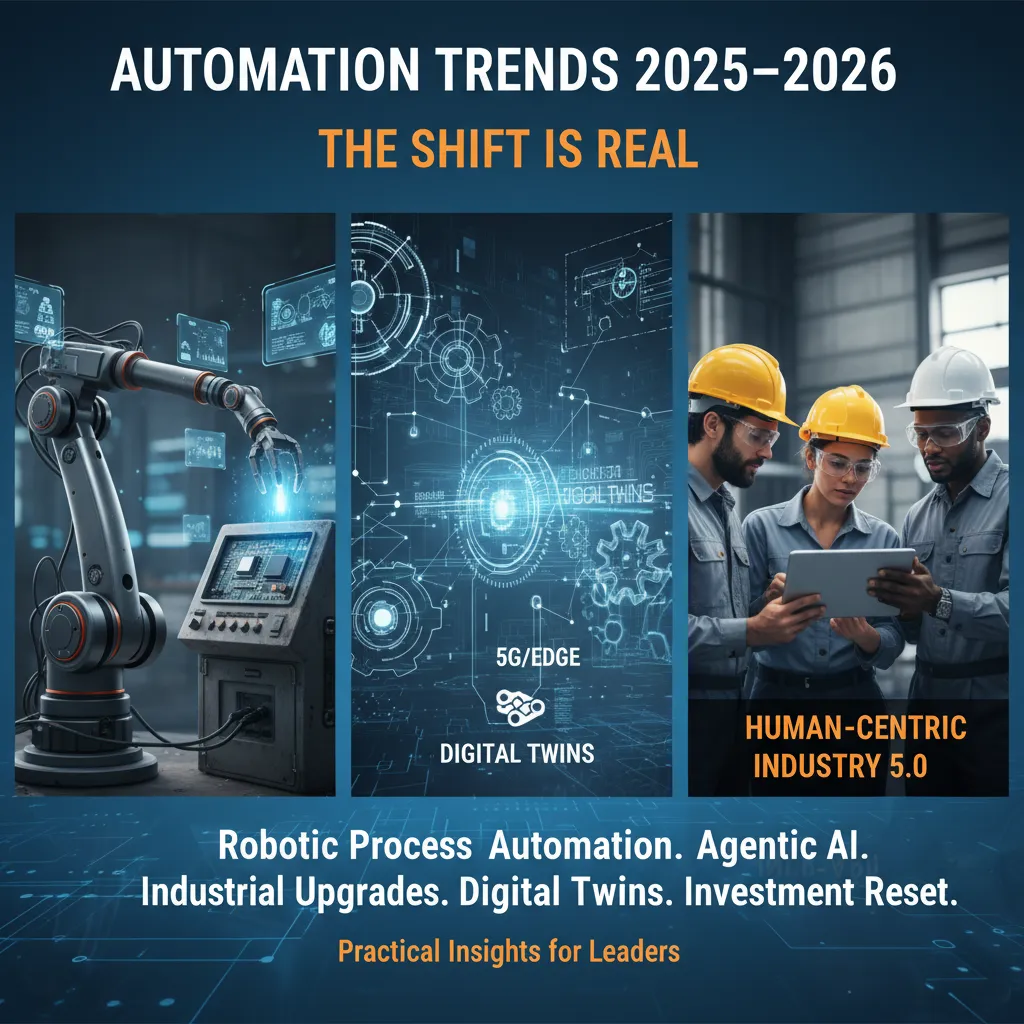
I didn’t plan to have my mind changed by a broken label printer. A couple months back, I was touring a mid-sized warehouse where everything looked “modern” on paper—dashboards, scanners, the whole vibe. But a tiny printer failure kicked off a 40-minute scramble: emails, manual re-keying, and someone literally running a sticky note down the aisle. That was my wake-up call. In 2025–2026, the winners aren’t the companies buying the flashiest Artificial Intelligence demos—they’re the ones stitching automation into the dull, everyday moments where work actually breaks. So this is my field-notes-style take on Automation Trends and Key Trends heading into Automation 2026: what’s changing, what’s overhyped, and where Industrial Automation gets surprisingly human again.
1) The “Reset Year” Before Automation 2026 Hits
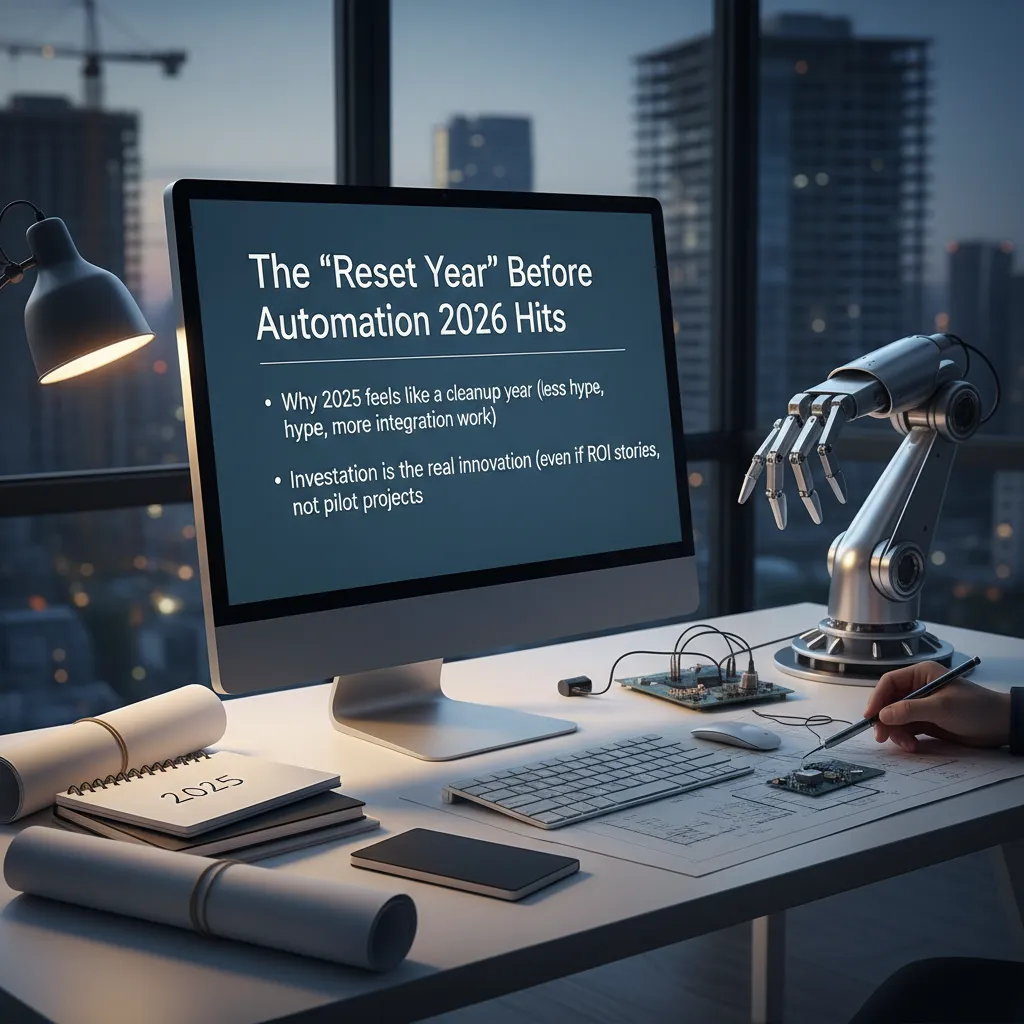
In my view, 2025 is the reset year in the automation trends 2025–2026 story. The hype is quieter, and that’s a good thing. Instead of chasing shiny demos, teams are doing the hard work: connecting tools, cleaning data, fixing workflows, and making automation reliable in real operations. This is where “automation” stops being a slide deck and starts being a system.
Why 2025 feels like cleanup, not a launch party
I’m seeing more time spent on integration work than on brand-new pilots. Companies are standardizing processes, reducing tool sprawl, and building shared layers like APIs, event triggers, and governance. It’s not glamorous, but it’s what makes automation scale.
My take: integration is the real innovation
Here’s my opinionated take: integration is the innovation, even if it’s boring. A “smart” bot that can’t hand off cleanly to a human, log actions, and handle edge cases is not smart—it’s fragile. The winners in 2026 won’t be the teams with the most pilots. They’ll be the teams with the best-connected stack.
“If it doesn’t integrate, it doesn’t automate.”
Investment pressure is rising
Leaders are asking for ROI stories, not experiments. Budgets are tighter, and automation needs to show saved hours, fewer errors, faster cycle times, or better customer outcomes. “We tested it” is no longer enough.
Quick gut-check: where automation breaks first
- Handoffs: unclear steps between teams, tools, or humans
- Exceptions: messy real-world cases that don’t match the happy path
- Ownership: nobody responsible for updates, monitoring, and fixes
2) Robotic Process Automation Grows Up (Finally)
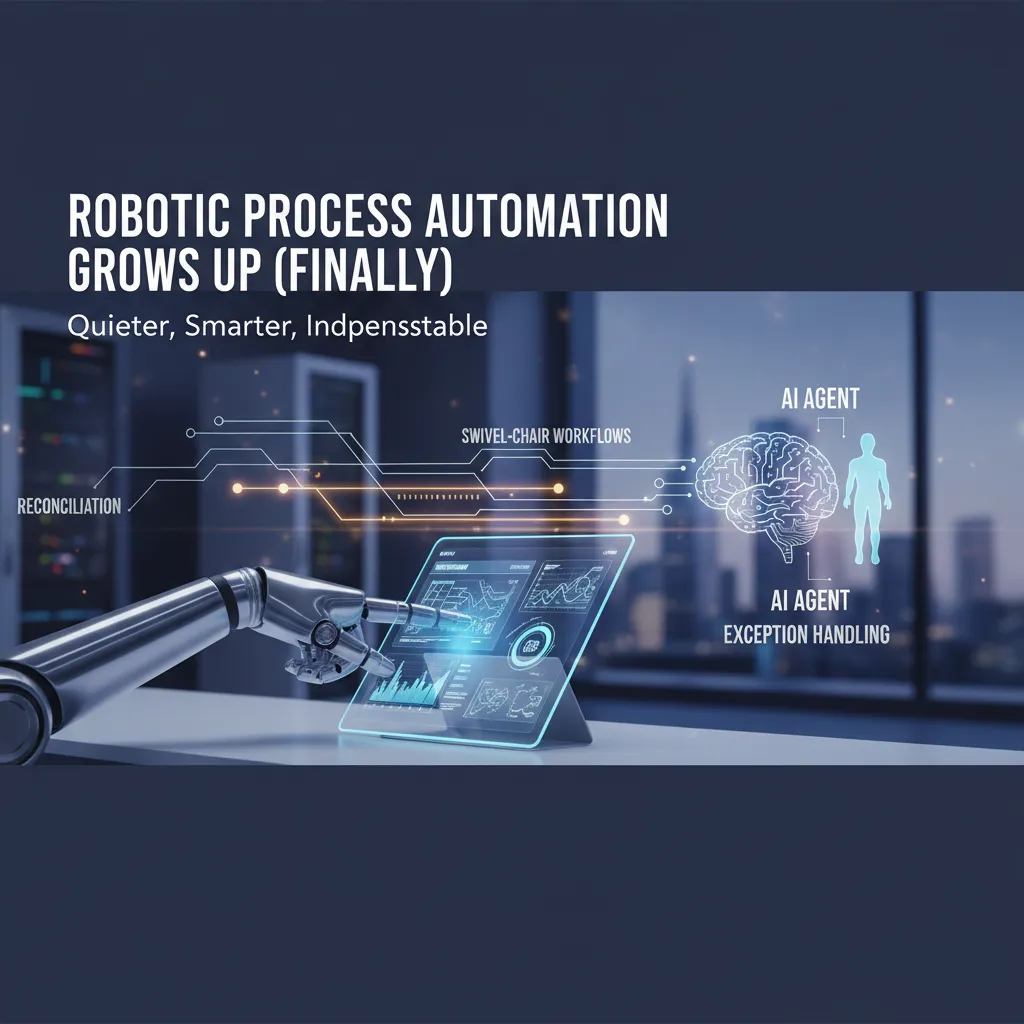
Robotic Process Automation (RPA) isn’t dead—it’s just getting quieter and more useful. In 2025–2026, I see fewer flashy “bot armies” and more small, stable automations that do one job well and don’t need constant attention. That’s a good thing. When RPA is treated like basic operations plumbing, it tends to last.
Where RPA still wins
RPA shines when the work is repetitive, rule-based, and stuck between systems that don’t talk to each other. It’s still one of the fastest ways to remove “copy-paste” labor without rebuilding your whole stack.
- Repetitive admin: data entry, form filling, ticket updates
- Reconciliations: matching invoices, payments, and ledger lines
- “Swivel-chair” workflows: moving info between email, spreadsheets, and web portals
The 2025–2026 twist: RPA + AI agents
The big shift is pairing RPA with AI agents for exception handling. The bot still does the predictable steps, but when something breaks—missing fields, odd formats, new vendor names—an AI agent can classify the issue, draft a fix, or route it to the right person with context. In practice, this makes automation feel less brittle and more like a helpful assistant.
RPA handles the “happy path.” AI agents help when reality shows up.
The one bot I loved (because it failed loudly)
I once inherited a finance bot that was designed to stop immediately and post a clear alert when totals didn’t match. It didn’t “power through” errors. That loud failure saved us from sending a bad reconciliation downstream. The lesson stuck with me: quiet automation is great, but loud failure is safer.
3) Agentic Automation: When AI Stops Waiting for Tickets
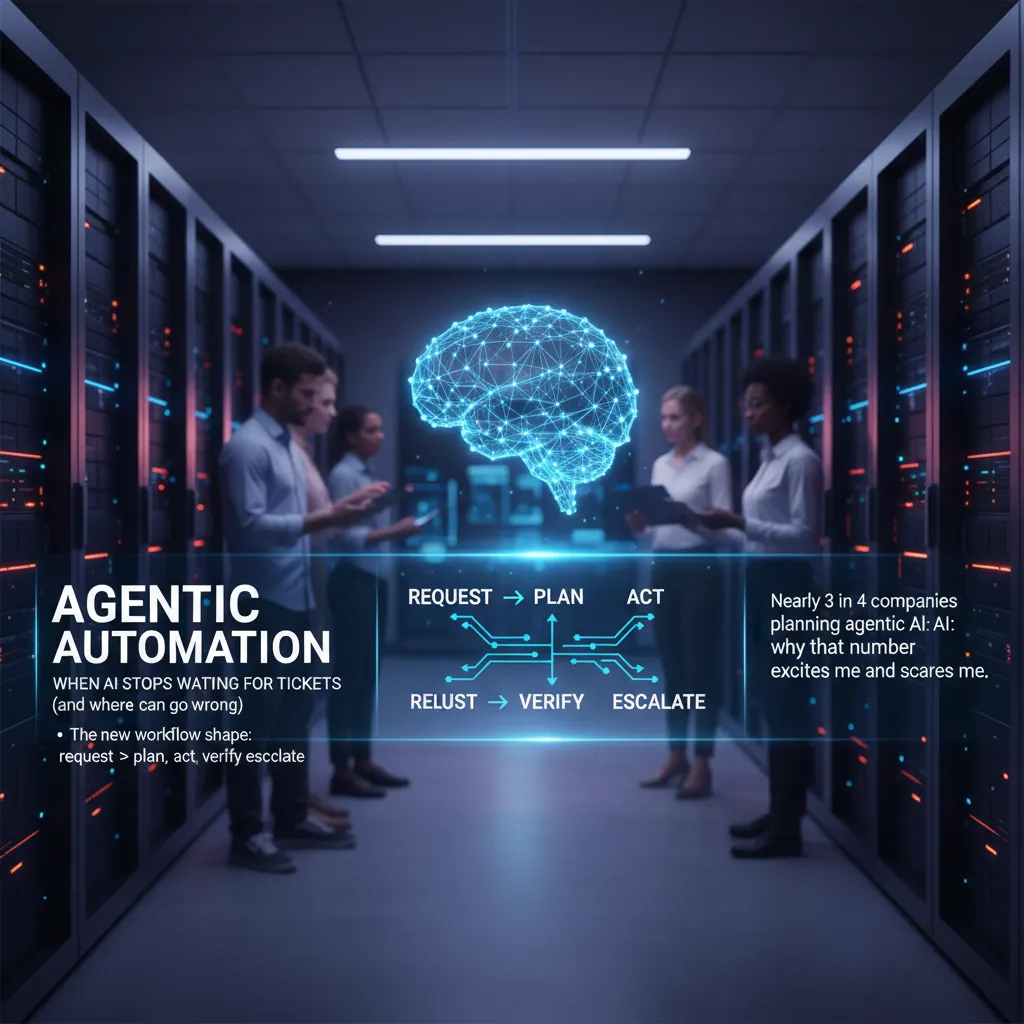
When I say agentic AI, I mean AI that doesn’t just answer questions—it takes steps. Instead of waiting for a human to open a ticket, it can notice a problem, decide what to do, and move work forward across tools. That’s powerful, but it can also go wrong if the agent has the wrong goal, bad data, or too much access.
Agentic AI in plain English (and the risk)
Plain English: an “agent” is a digital worker that can choose actions. The risk is simple too: it might act fast and confidently… in the wrong direction. I worry most about silent errors, like updating the wrong record or sending the wrong email.
The new workflow shape
I’m seeing a repeatable pattern that matches the 2025–2026 shift toward agentic automation:
- Request (a signal, message, or alert)
- Plan (break the task into steps)
- Act (use apps, APIs, or RPA)
- Verify (check results, logs, and constraints)
- Escalate (handoff when confidence is low)
Nearly 3 in 4 companies are planning this
That “nearly 3 in 4” number excites me because it means real investment in AI-driven workflows, not just pilots. It scares me because many teams will skip the boring parts: permissions, audit trails, and clear escalation rules.
Wild-card scenario: supplier delay negotiation
Imagine an AI agent that spots a shipment delay, messages the supplier, proposes new delivery windows, updates the ERP, and alerts sales—like a calm, tireless dispatcher.
“I can adjust the schedule. Which option can you confirm today: Tuesday AM or Wednesday PM?”
4) Industrial Internet + Sensor Technologies: The Quiet Data Tsunami
In 2025–2026, I keep seeing the same pattern: IIoT isn’t glamorous, but it’s the layer that makes Machine Learning useful. Models don’t run on wishful thinking. They run on real-world signal—temperature drift, vibration changes, pressure drops, cycle-time creep. When plants say “we’re doing AI,” I usually ask, “What’s your sensor story?”
What I look for on a plant walk
I’m not impressed by dashboards that only show online/offline. I look for sensors that tell the truth, even when the truth is messy.
- Calibration habits (not just the sensor brand)
- Context: load, speed, product, shift, ambient temp
- Data quality: missing points, noisy signals, time sync
- Placement: mounted where it measures the real problem
Where sensors pay back fast
The quickest wins are still predictive maintenance and supply chain visibility. A few well-placed vibration and current sensors can catch bearing wear before it becomes downtime. Simple tracking sensors can reduce “where is it?” time for pallets, totes, and WIP, which helps planning and reduces rush shipping.
“If the data is wrong, the model is just confident noise.”
A small tangent I trust
There’s a weird comfort when a machine starts to click normally again. After a repair guided by sensor trends, that familiar rhythm is proof the system is back in control. It’s not flashy—but it’s the sound of reliability returning.
5) Smart Factory Meets 5G Technology + Edge Computing (No More “Data Later”)
In 2025–2026, I’m seeing smart factory projects shift from “collect data now, decide later” to decide near the machine. That change is tied to 5G technology. With faster, more stable wireless links, sensors, robots, and controllers can share signals in tighter cycles. The cadence speeds up, and the factory starts acting on what’s happening right now, not after a cloud report runs.
Edge computing is the unsung hero
5G gets attention, but edge computing is what makes real-time automation practical. By processing data on-site (or in a local micro data center), I can cut latency, reduce bandwidth costs, and keep systems running even when the internet is shaky. It also helps with privacy: sensitive production data can stay inside the plant.
- Latency: faster control loops for vision inspection, safety, and robotics
- Uptime: local decisions even during cloud or WAN issues
- Privacy: keep recipes, quality data, and logs on-prem
Autonomous vehicles + real-time routing by Automation 2026
By Automation 2026, what feels plausible is more coordinated AMRs/AGVs: dynamic routing around congestion, live task assignment, and safer interaction zones. Instead of fixed paths, vehicles can respond to changing floor conditions and production priorities in seconds.
My rule of thumb: if it needs a human reflex, it probably needs edge.
That includes collision avoidance, stop/go safety logic, and instant quality rejects—work that can’t wait for “data later.”
6) Digital Twins + Software-Defined Automation: The New “Try Before You Buy”
In 2025–2026, I see digital twins moving from “cool demo” to a real decision tool. A twin is not just a shiny 3D model of a line. The useful version connects to real data—cycle times, sensor states, bottlenecks—so I can test changes before I touch the floor. That’s the new “try before you buy” for automation projects.
Digital twins that actually help
When I use a twin the right way, I’m asking simple questions: Will this new recipe slow the line? Will a new robot path cause a jam? What happens if we change a conveyor speed? The value is in reducing unknowns, not in graphics.
Software-defined automation (and why retrofits get easier)
Software-defined automation matters because it decouples control logic from hardware. Instead of rewriting everything when we swap a PLC, add a vision system, or retrofit an older cell, we can keep the logic more portable and update pieces in smaller steps. That lowers risk and makes upgrades feel less like a full rebuild.
- Faster retrofits: reuse logic, change interfaces
- Less vendor lock-in: more options for hardware
- Safer changeovers: test logic in a twin first
Mini confession: I used to roll my eyes at digital twins—until I watched one catch a changeover issue that would have caused downtime.
If I’m selling this internally, I keep it simple: fewer surprises during changeovers, fewer emergency fixes, and more confidence when we approve capital for industrial automation.
7) Industry 5.0, Collaborative Robots, and the Surprisingly Human Future
Industry 5.0 is about people, not just output
When I look at automation trends 2025–2026, the biggest shift is that “better” no longer means only faster. Industry 5.0 pushes human-centric automation and sustainability alongside productivity. That means designing systems that protect workers, reduce waste, and support long-term resilience—not just quarterly numbers.
Collaborative robots in the real world
Collaborative robots (cobots) are showing up where they make work safer. I see them used for heavy lifting, repetitive handling, and tasks that expose people to heat, fumes, sharp edges, or awkward postures. The goal is not “replace the shift.” It’s safer shifts and fewer injuries, with humans doing the judgment calls and quality checks.
- Move and position heavy parts
- Support hazardous or messy steps
- Reduce strain in repetitive assembly
If AI is a growth driver, why the resistance?
One stat from the source material sticks with me: 82% of industrial companies see AI as a growth driver. Yet people still resist because change feels personal—fear of job loss, fear of being monitored, or fear of not keeping up.
A practical bridge: train, redesign, celebrate “boring wins”
I’ve found the best path is simple and steady:
- Train teams early, with hands-on time.
- Redesign jobs so humans own exceptions, safety, and improvement.
- Celebrate boring wins: fewer defects, fewer injuries, smoother handoffs.
“The most human future of automation is the one that makes work safer, cleaner, and easier to learn.”
8) Supply Chain Automation: Traceability, Blockchain, and “Resilience” as a KPI
In 2025–2026, I see the supply chain as the pressure test for every automation strategy. It’s where “smart workflows” meet real-world mess: late containers, missing parts, sudden demand spikes, and new compliance rules. If your automation can’t handle exceptions, it’s not automation—it’s a demo.
Traceability: When blockchain helps (and when it’s overkill)
Blockchain integration shows up most in traceability. It helps when many parties need a shared record and trust is low—think food safety, pharma, high-value components, and ESG reporting. A tamper-resistant log can reduce disputes and speed recalls.
But it’s overkill when a normal database plus strong access controls does the job. If the problem is bad scanning, missing master data, or suppliers who don’t update status, blockchain won’t fix that. I treat it as a tool, not a default.
Digital twins + AI agents for disruption response
What’s changing fast is the move from tracking to responding. Digital twins model inventory, capacity, lead times, and constraints. AI agents then act on that model to handle disruptions in near real time:
- Reroute shipments based on port delays and cost-to-serve
- Re-order with alternate suppliers when risk scores spike
- Re-promise delivery dates using live capacity and demand signals
My slightly spicy take: in 2026, resilience beats optimization. A supply chain that’s 2% cheaper but breaks under stress is the expensive one.
Conclusion: My “Automation Trends” Litmus Test for 2026
I keep thinking about that label printer story: everything looked automated until one small exception showed up—wrong stock, a jam, a missing template—and the whole “system” became a manual scramble. That’s my core takeaway from automation trends 2025–2026: automation is only real when it can handle the messy edges, not just the happy path.
So for 2026, I’m using a simple litmus test before I call anything “automated.” First, agency: can the tool take action, not just suggest? Second, integration: does it connect cleanly to the systems where work actually happens? Third, data trust: are the inputs reliable enough that I’d bet my day on them? Fourth, human fit: does it match how people work, approve, and recover when something feels off? And fifth, resilience: when exceptions hit, does it degrade gracefully, log clearly, and route the issue to the right person?
If you’re planning your own automation roadmap, my advice is boring on purpose: pick one process and make it boringly excellent before you scale. Get the handoffs right. Define what “done” means. Decide what happens when data is missing. Build the exception path like it’s the main path—because it is.
In 2026, I’m not chasing magic. I’m chasing repeatable outcomes.
My wild-card analogy: good automation is a good kitchen. Mise en place beats magic. When everything is prepped, labeled, and within reach, the work flows—and the surprises don’t ruin dinner.
TL;DR: 2025–2026 Automation Trends are shifting from “automate a task” to “orchestrate a system.” Expect heavier use of Robotic Process Automation + Artificial Intelligence + Machine Learning, a surge in agentic AI, more retrofit projects, and Industrial Internet + 5G Technology + edge computing enabling real-time operations. 2026 looks like the integration year: digital twins, software-defined automation, collaborative robots, stronger cybersecurity compliance, and investment pressure to prove ROI—fast.


Comments
Post a Comment