Marketing Trends 2025–2026: The Weird, Human Shift
Last fall I watched a small business owner “fire” their homepage—not their web developer, the homepage itself. They replaced it with a chat experience and a single, awkwardly honest video shot in one take. Two months later, their leads were up, and my polished landing-page instincts were personally offended. That little moment has been stuck in my head while I’ve been tracking marketing trends 2025–2026: we’re not just changing tactics; we’re changing what “good” even means. This post is my field-notes version—opinions, a couple tangents, and the trends I think will actually move the needle.
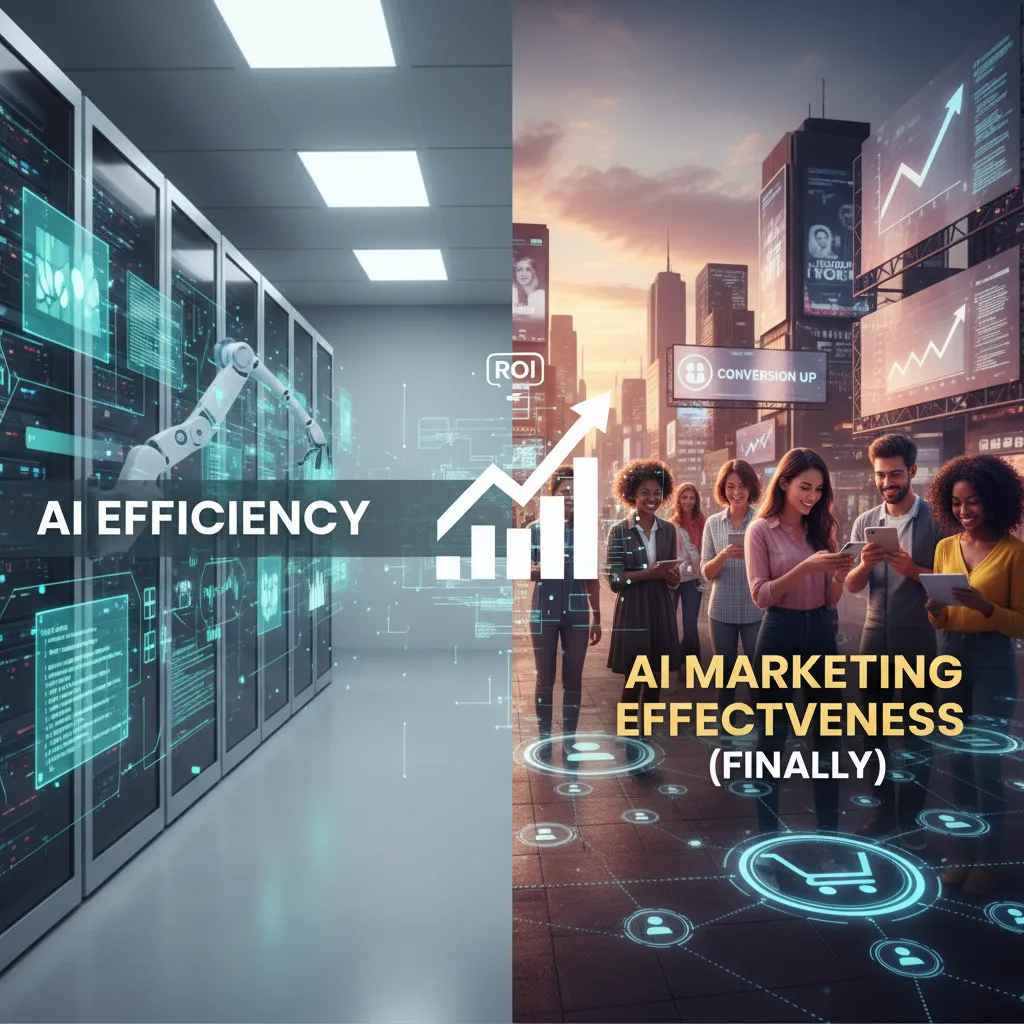
1) From AI efficiency to AI marketing effectiveness (finally)
My 2025 confession: I used GenAI mostly to ship faster. More posts, more emails, more landing pages. I felt productive. Then I got humbled. “Faster” didn’t equal “better.” Some AI-written pieces looked fine, but they didn’t move people to sign up, reply, or buy. I learned the hard way that output is not the same as impact.
Why 2026 changes the scoreboard
In 2026, I expect teams to stop bragging about prompts, volume, or “vibes,” and start reporting effectiveness: qualified leads, pipeline, retention, and revenue per asset. AI will still help with speed, but the real question becomes: Did it work? That shift feels very human—because it forces us to care about meaning, clarity, and trust, not just production.
Experiments I’d run (and what I’d measure)
- A/B test human draft vs AI-generated content marketing on the same topic and offer.
- Track beyond clicks: scroll depth, email sign-ups, demo requests, and sales-qualified rate.
- Compare assisted workflows: human outline + AI expansion vs AI outline + human rewrite.
“If the metric stops at traffic, you’re measuring attention, not effectiveness.”
Wild card: treat AI workflows like mini products
When an AI workflow performs, I treat it like a product: version it, QA it, and document it.
- Versioning:
workflow_v1.3with clear inputs and rules - QA: brand voice checks, fact checks, and compliance review
- Retire: if conversion drops, assume it’s stale and rebuild
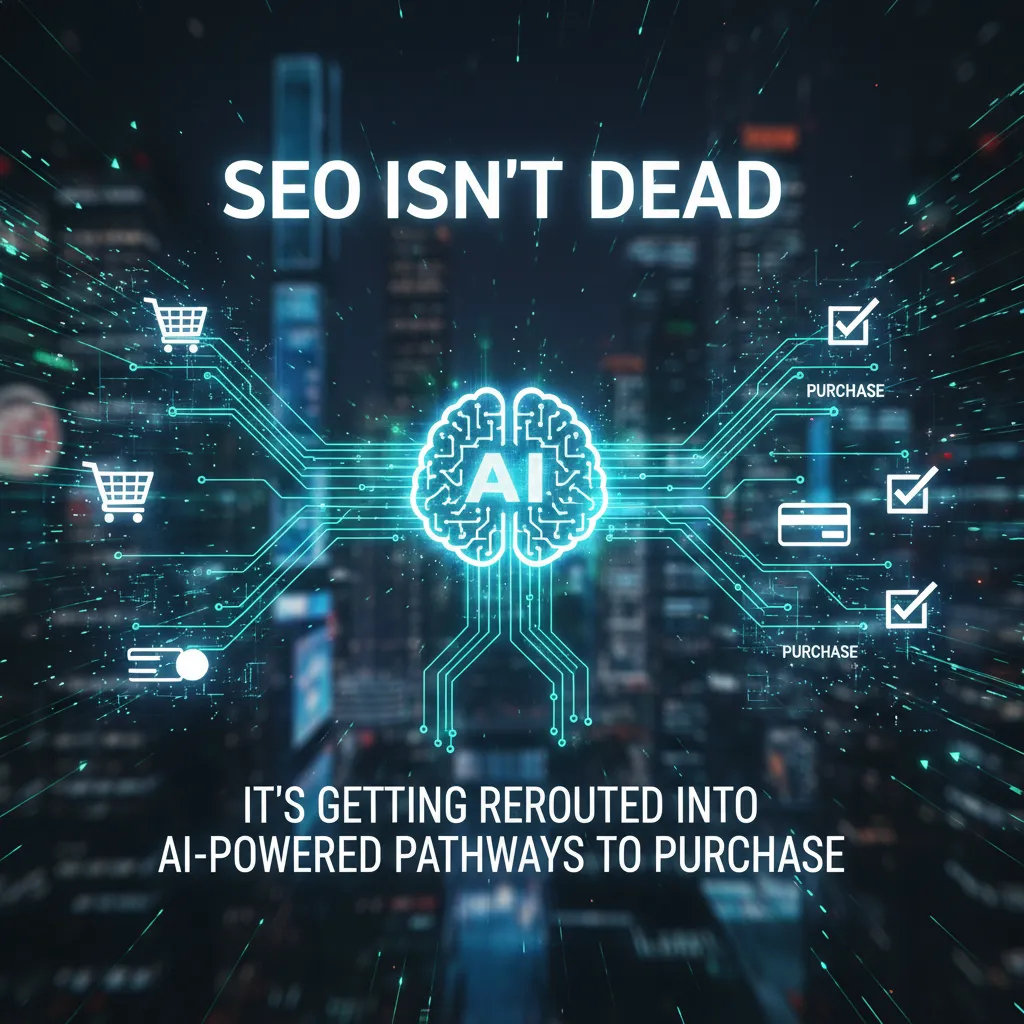
2) SEO isn’t dead; it’s getting rerouted into AI-powered pathways to purchase
The uncomfortable shift: SEO traffic generation matters less if the buyer never sees your page. In 2025–2026, more searches end inside AI summaries, chat results, and shopping assistants. The “click” is no longer the main event. Sometimes the buyer gets an answer, a shortlist, and a checkout option without leaving the interface.
What I’m optimizing for now
I still care about search engines, but I’m optimizing for being cited, recommended, and even “transacted through” inside AI tools. That means my content has to be easy to quote, easy to verify, and clear enough that an AI can safely reuse it. If an assistant is building a buying path, I want my brand to be one of the trusted steps.
A practical checklist I actually use
- Content structured validation: clean headings, clear FAQs, and schema where it fits.
- “Source-worthy” data: original numbers, dates, methods, and definitions (not vague claims).
- Answer-style pages: write like I’m solving a problem, not pitching a brochure.
- Proof signals: author names, update dates, references, and transparent policies.
- Product clarity: pricing ranges, use cases, limits, and comparisons in plain language.
Small rant (loving)
Keyword rankings are a lagging indicator; inclusion in answers is the new leading one.
I still track rankings, but I treat them like a rearview mirror. The real question I ask now is: When AI explains this topic, does it pull from me—and does it move the buyer closer to purchase?
3) Conversational marketing trends: the website becomes a dialogue (and sometimes a therapist)
My “I didn’t want chat” era ended when I watched real prospects ask better questions in a conversation than they ever did on a form. They didn’t want to “submit.” They wanted to think out loud, get unstuck, and feel seen. In 2025–2026, that’s the shift: the website stops being a brochure and starts acting like a helpful guide.
What conversational experiences replace
- Static pages that force people to guess which plan fits
- Buried PDFs that hide pricing, timelines, and requirements
- The dreaded “contact sales” cliff where curiosity dies
Instead, a conversational layer can answer “Can this work with my stack?” or “What’s the fastest path under $10k?” without making someone wait for a demo. It’s also a cleaner way to qualify leads: not by gating, but by helping.
How to do it without being creepy
- Preference capture: ask for constraints, not secrets
- Clear boundaries: say what you store and why
- Exit ramps: offer email me this, talk to a human, or browse quietly
“Helpful feels human. Tracking feels like surveillance.”
Hypothetical scenario (privacy by design)
A brand agent remembers my budget ($5–8k), timeline (30 days), and must-haves (SOC 2, Slack integration). But it forgets my personal life—by design. It doesn’t store names of coworkers, health details, or late-night venting. It simply saves a short “project brief” I can edit or delete.
4) Personalization marketing strategy: not “Hi {FirstName}”—more like mind-reading (but ethical)
In 2025–2026, personalization isn’t “Hi {FirstName}.” The new baseline is messaging that matches a person’s age, goals, and concerns—and it has to show up everywhere: ads, landing pages, in-app prompts, SMS, support replies, and email. If the tone changes by channel, people feel the seams.
Where personalization breaks
I see teams personalize the copy, but not the offer, onboarding, or product experience. That’s where it gets weird. If I click an ad that promises “fast setup for busy founders,” then land on a generic page and a slow onboarding flow, the “personalization” feels like a trick. Ethical personalization means the experience stays consistent with what you learned about me.
My favorite low-tech move: map customer anxieties
Instead of chasing perfect data, I build 5–7 “customer anxieties” and map content to each one. It’s simple, and it works because it matches real decision stress.
- Fear of wasting money → clear pricing, ROI examples
- Fear of looking stupid → plain-language demos, glossary
- Fear of switching costs → migration plan, timelines
- Fear of hidden work → onboarding checklist, time estimates
- Fear of risk → security, guarantees, social proof
Design taste is part of personalization
One more trend: design taste is a marketing skill now. Personalization that looks messy feels fake, even if the data is right. Clean layout, consistent visuals, and one clear message per screen make the “mind-reading” feel calm—not creepy.
5) Multichannel marketing strategy: the era of “my channel, my metrics” ends
I’ve watched teams celebrate a “win” in one channel while the overall journey quietly leaked customers—never again. In 2025–2026, multichannel marketing strategy is less about owning a platform and more about owning the experience across platforms.
What a multichannel marketing ecosystem actually looks like
When it works, it feels boringly consistent. The customer sees one story, even if they move from TikTok to email to search to a sales call. Internally, the team shares the same goals and learns from the same data.
- Shared story: one promise, adapted to each channel’s format
- Shared measurement: one set of definitions for leads, trials, revenue, churn
- Shared learning loop: insights travel fast, not trapped in “my channel” reports
From channel ROAS to journey-level impact
Cross-channel marketing measurement has to move past channel-level ROAS. With AI-assisted journeys (recommendations, dynamic emails, chat, retargeting), credit is spread across touches. I’m pushing teams to track:
- incremental lift by journey stage (awareness → consideration → conversion)
- time-to-convert and drop-off points across channels
- customer quality signals (repeat purchase, retention, support load)
Reality check: integration is the work
Integration is boring work—UTMs, taxonomy, dashboards—but it’s the difference between guessing and knowing. I standardize naming like:
utm_source=meta&utm_medium=paid_social&utm_campaign=launch_q2
Then I make one dashboard everyone trusts, so we stop arguing about numbers and start fixing the journey.
6) Video content marketing + human-first media: lo-fi trust beats glossy perfection
The surprising part of 2025 is this: clear, educational short videos often beat high-production ads—even when the lighting is… tragic. I keep seeing the same pattern in video content marketing: people trust a real person explaining a real problem more than a perfect brand spot. “Human-first media” wins because it feels like help, not hype.
What I mean by an education-first marketing approach
When I say education-first, I mean I teach the buyer something useful before I ask for anything. One simple tip, one quick demo, one mistake to avoid. If the viewer learns in 60 seconds, they’re more open to the next step.
- Answer one question your customers ask every week
- Show the “how,” not just the “why”
- Use simple words and real examples
Where GenAI helps (and where it hurts)
AI video ads are improving fast, but I use GenAI like a tool—not a face. It helps most with:
- Editing rough cuts faster
- Captions and translations
- Hook ideas and tighter scripts
Where it hurts is the uncanny vibes: fake voices, stiff avatars, and “too perfect” scenes that feel like an ad. If it looks unreal, trust drops.
Mini challenge: 8 weeks of answer videos
- Record one 60-second “answer video” per week for 8 weeks
- Title it like a search query (example:
How do I choose [X]?) - Review which questions keep repeating—and make those your next topics
7) Event marketing conversion (and the quiet return of direct mail marketing)
My hot take: the more digital everything gets, the more powerful a handshake becomes—annoyingly so. In 2025–2026, I’m seeing event marketing shift from “brand awareness” to measurable conversion, because real humans in a room create clarity faster than any funnel.
Why small workshops convert
Small workshops beat big booths because they run on trust, transparency, and real-time objections handled like adults. When someone asks, “What does this cost?” or “Will this work for my team?” I can answer on the spot, show examples, and read the room. That feedback loop is the conversion engine.
- Trust: people see how you think, not just what you sell.
- Transparency: live demos and honest limits reduce buyer fear.
- Objection handling: questions get resolved before they become “I’ll think about it.”
Direct mail retargeting (yes, paper)
The “weird human shift” is that direct mail is quietly coming back as a retargeting layer. I don’t send random postcards. I send paper only after high-intent actions: attending an event, booking a demo, or visiting the pricing page.
Paper works when it feels like a follow-up artifact, not an ad.
- Trigger: event check-in, demo completed, or pricing visit.
- Send: a short letter + one-page case study + QR code to the next step.
- Track: unique URL or
?utm_source=directmail.
Packaging cameo: intentional, not wasteful
I also like paper-based packaging solutions for samples and welcome kits—recyclable, minimal, and designed to feel deliberate. A simple folder, a well-printed checklist, and a handwritten note can outperform another “just following up” email.
8) Employee influencer marketing + trust ecosystems: your moat is people, not posts
In 2025–2026, I’m seeing a clear shift: the most believable “influencer” is often the engineer, support rep, or ops lead who actually knows the product. Polished brand posts can feel safe, but they rarely feel true. People trust people who do the work.
Internal influencers: credibility beats polish
If I want trust fast, I don’t start with a big campaign. I start with the humans already answering real questions every day—especially support and product. Their language matches the customer’s pain, and that’s hard to fake.
How I’d start without making it cringe
- Volunteer-led: opt-in only. No forced “everyone post on LinkedIn” rule.
- Light editing: fix audio, add captions, keep the voice.
- Clear guardrails: what’s confidential, what’s okay, how to disclose.
- Real opinions allowed: “Here’s what we’re improving” builds more trust than hype.
Trust ecosystems: make credibility compound
I also treat content like a connected system, not random posts. I link my best assets together—videos, events, docs, FAQs, case studies—so each piece supports the next. A short clip can point to a help doc; the doc can point to a webinar; the webinar can point to a customer story. That’s how trust stacks.
“When customers and employees amplify the same story, the algorithm almost doesn’t matter.”
This is the network effect moat: shared proof, repeated across many real accounts, in many formats, over time.

Conclusion: My 2026 marketing plan in one sentence (plus a messy post-it list)
After tracking the shifts in Marketing Trends 2025–2026, my plan is simple: use AI to remove busywork, build conversational journeys that feel human, personalize with care, measure across channels, and earn trust with proof.
The threads connect. AI is getting more effective, but it only matters when it helps me serve real people faster and better. Conversational journeys (chat, DMs, live Q&A, even voice) are becoming the new “homepage,” so I’m designing flows that answer questions in plain language. Personalization is moving from “creepy targeting” to “helpful context,” and multichannel measurement is the only way I can see what actually drives action when buyers bounce between search, social, email, and events. Under all of it is human trust: clear claims, honest pricing, and content that teaches.
If a tactic doesn’t increase clarity or trust, it’s probably noise.
Next week I’m keeping it practical. I’ll pick one journey (from first question to first purchase), instrument it end-to-end, add one conversational layer (a guided chat that routes to a human when needed), ship one short educational video that answers the top objection, and schedule one small event where customers can talk to me and each other. Then I’ll review the data and the conversations, not just the clicks.
My wild card for 2026: imagine buyer bots shopping my category and purchasing on their own. When they compare options, would my brand agent be the one they choose—because it’s the clearest, most trusted, and easiest to verify?
TL;DR: In 2026, marketing shifts from “AI saves time” to AI marketing effectiveness that proves growth. SEO evolves into earning inclusion in AI-powered pathways to purchase. Conversational marketing trends replace static sites. Personalization becomes table stakes. Multichannel marketing strategy and measurement unify journeys. Short, educational video content marketing keeps winning. In-person events remain an event marketing conversion driver. Employee influencer marketing and trust ecosystems become moats.


Comments
Post a Comment