AI Sales Tools Compared: Best AI Agents in 2026

Last quarter, I watched a deal “look green” in the CRM right up until the customer ghosted us. Two days later, a conversation analysis tool replayed the call and I caught it: the buyer had asked a pricing question we never truly answered. That tiny moment sent me down a rabbit hole of AI sales tools—some feel like a helpful co-pilot, others like a pushy backseat driver. In this post, I’m comparing top sales tools (and a few 2026 wildcards) the way I’d do it for my own team: what they’re great at, what they’re awkward at, and where the real value shows up (usually in boring places like pipeline hygiene).
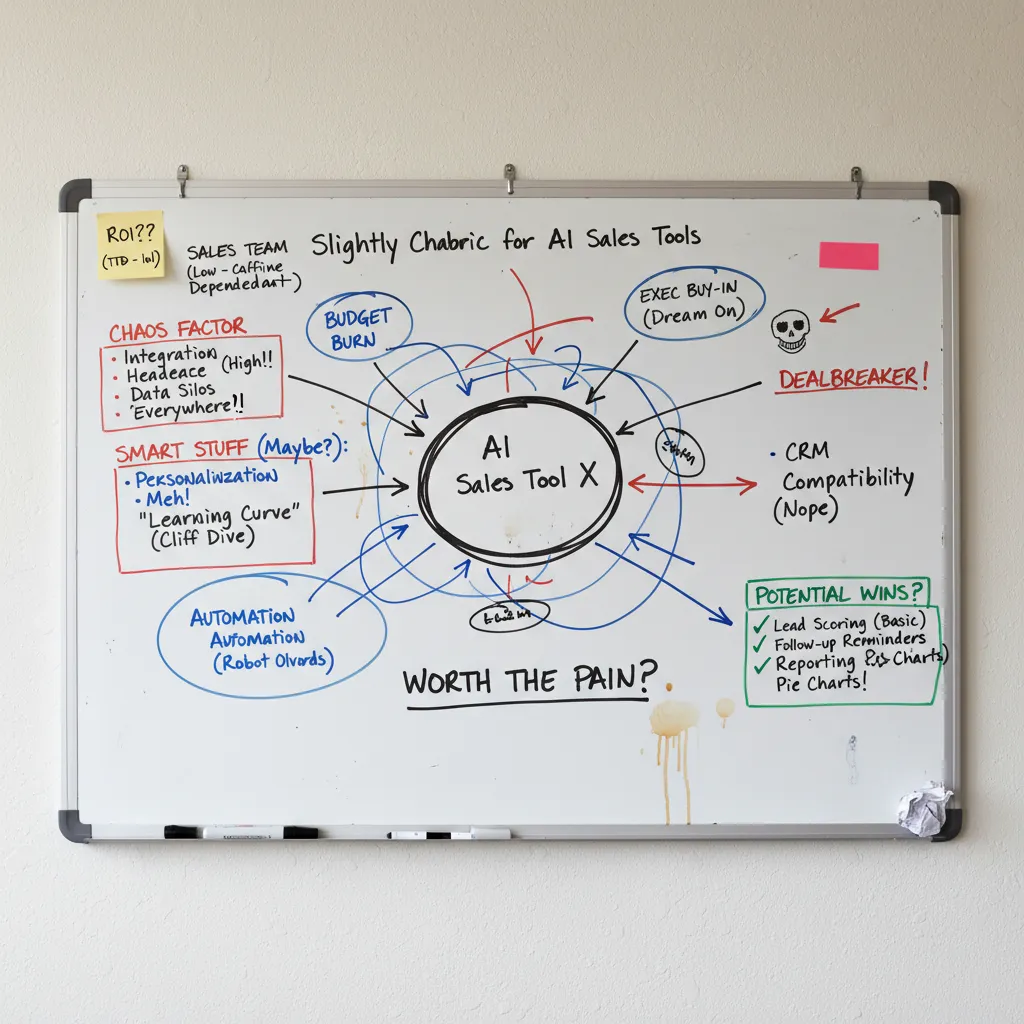
1) My slightly chaotic rubric for AI Sales Tools
I used to judge sales tools by the dashboard. If it looked clean, had charts, and promised “full visibility,” I was sold. Then I realized something: pretty dashboards don’t stop bad decisions. So my main question became: Did it save me from a dumb mistake? If a tool can’t prevent the classic “I thought that deal was real” moment, it’s not helping.
My rubric is simple: less “wow,” more “did it keep me from being wrong?”
The four buckets (plus one bonus)
When I compare AI-powered solutions (like the ones in Top Sales Tools Compared: AI-Powered Solutions), I sort them into buckets. It keeps me honest and makes the “AI agent” claims easier to test.
- Sales Automation: Does it remove busywork (follow-ups, notes, task creation) without creating new work?
- Lead Qualification: Does it help me spot good-fit leads faster, or does it just score everything “high”?
- Revenue Intelligence: Does it improve pipeline truth—deal health, risk, next steps, and close timing?
- Conversation Analysis: Does it pull real insights from calls (objections, competitors, pricing talk) that I can act on?
- Bonus: Personality Insights: Nice when it’s grounded in behavior, not vibes. Helpful for coaching and messaging.
My “two-forecast-meeting test”
I have a blunt test for anything claiming forecasting or revenue intelligence. I run it through two forecast meetings.
If it doesn’t change what I say in forecasting, it’s not real deal forecasting. A real tool makes me adjust a commit, call out risk earlier, or explain why a deal moved.
CRM integration gut-check
Finally: CRM integration. My rule is harsh but fair:
- If reps have to copy/paste notes, fields, or next steps, adoption quietly dies (I’ve seen it).
- If updates happen in the flow of work, the tool sticks.
Even a smart AI agent fails if it lives outside the CRM. In practice, the best tools feel like they’re already part of the system.
2) Lead Qualification that feels human (and doesn’t annoy people)
Exceed.ai: great at “polite persistence,” risky when it feels too eager
When I look at AI lead qualification tools, Exceed.ai stands out for automated email and chat conversations that can handle the basics: quick Q&A, routing, and meeting scheduling. It shines when leads are warm and just need a gentle nudge to pick a time, confirm budget, or clarify use case. The downside is tone. If the follow-ups stack too fast, it can sound too eager, like a rep who won’t take a hint. I’ve found it works best with clear guardrails: fewer touches, longer delays, and a “stop” rule when someone goes quiet.
Apollo.io: the practical engine for prospecting workflows
Apollo.io feels less like a “chatty agent” and more like a prospecting system. You get lead gen data, B2B database access, AI email writing, sequence automation, and analytics that help you run repeatable outbound. In the “Top Sales Tools Compared: AI-Powered Solutionsundefined” style of comparison, Apollo is the tool I’d pick when the problem is scale and process: finding the right accounts, building lists, and keeping outreach consistent across a team.
My inbox reality tangent: volume isn’t engagement
I see teams celebrate sending 5,000 cold emails like it’s a win. But inboxes don’t care about volume; buyers care about relevance. Instead of measuring “emails sent,” I’d track:
- Positive reply rate (not just any reply)
- Time-to-first-human-response
- Meetings held (not booked)
- Forward/share signals (when a prospect loops in a teammate)
More outreach can create more noise. Better targeting creates more conversations.
Humantic AI: the wild card for multi-stakeholder deals
Humantic AI is interesting because it adds personality insights and buying committee analysis, with one-click email personalization tied to LinkedIn. I like it most when deals involve multiple stakeholders and you need to adjust your message for a CFO vs. a technical lead. It’s not a replacement for good discovery, but it can make your first touch feel less generic and more human.
3) Conversation Analysis & coaching: the ‘tape room’ for sales calls
I think of conversation analysis as the tape room for sales calls: you review the play, spot what worked, and fix what didn’t—without guessing. In 2026, the best AI sales tools don’t just record calls; they turn them into coaching you can actually use.
Gong.io: conversation intelligence + the coaching moments I wish I’d caught earlier
Gong.io is still my go-to example of conversation intelligence done right. It helps me find patterns across calls and zoom in on the moments that quietly decide the deal. The biggest wins come from catching things I used to miss in real time:
- Pricing: when the buyer asks “ballpark?” and the rep dodges or over-explains.
- Next steps: when a call ends with “I’ll follow up” instead of a clear date and owner.
- Competitor mentions: when a prospect drops a name and the rep doesn’t probe.
Those clips become instant coaching: “Here’s the exact sentence that lost momentum,” not vague feedback like “be more confident.”
Remberg Copilot: real-time suggestions (useful, with guardrails)
Remberg Copilot leans into real-time call suggestions and product recommendations. I like it for newer reps who need help remembering discovery questions or matching needs to features. But I’d set guardrails so reps don’t sound scripted:
- Use prompts as options, not a word-for-word script.
- Limit pop-ups during sensitive moments (pricing, objections).
- Coach tone: “ask, don’t pitch” when the buyer is sharing context.
How I’d use conversation analysis for sales enablement
Instead of building a 40-slide deck, I’d turn call snippets into micro-training:
- Pick one skill (handling pricing, setting next steps).
- Share 2–3 short clips: one great, one average, one risky.
- Add a simple rubric in a
3-bulletchecklist.
Small confession: I used to hate call recording… until it saved my quarter.

4) Revenue Intelligence & Deal Forecasting: where optimism goes to get audited
When I compare AI sales tools in 2026, this is the category where “good vibes” meet hard math. Revenue intelligence and forecasting tools don’t just report what’s in the CRM—they challenge it. And if your team is used to optimistic commit calls, this is where the audit begins.
Clari + Clari Copilot: the pipeline view I actually trust
Clari earns its spot because it gives me real-time pipeline visibility without making me dig through ten dashboards. With Clari Copilot, I can quickly prioritize high-potential deals based on activity, movement, and risk signals. The feature I keep coming back to is the pipeline health view—because it shows what’s changing, what’s stuck, and what’s quietly slipping.
Einstein AI (Salesforce): powerful, if your data isn’t a dumpster fire
Einstein AI is a strong option for teams already living inside Salesforce. I like it for lead scoring, stalled-deal alerts, and the way it learns from past performance to spot patterns humans miss. But I’ll say it plainly: it works best when your CRM data is clean. If your stages are inconsistent or reps don’t log activity, Einstein will still “predict”—just not in a way I’d bet a quarter on.
Oliv AI Forecaster Agent: forecasting at real scale
Oliv’s AI Forecaster Agent stands out when volume gets serious. It can automate pipeline analysis, generate forecast reports, and flag deal risk across 200+ opportunities. That scale matters because manual inspection breaks fast—especially across regions, segments, and rep experience levels.
My forecasting philosophy (and why it can sting)
I’m a believer in bottom-up forecasting, but only when the tool calls out anomalies. If an “80% likely” deal has no next step, no recent activity, and a pushed close date, I want the system to say so.
Bottom-up forecasting is only honest when the tool is willing to disagree with your optimism.
- Clari helps me see pipeline health in motion.
- Einstein helps when CRM hygiene is strong.
- Oliv helps when opportunity volume is the real problem.
5) AI Sales Agents in the CRM: build, buy, or bolt-on?
When I compare AI sales agents in 2026, I start with one simple question: do I want to build inside my CRM, buy what the CRM already offers, or bolt-on an outside agent that connects through APIs? The right answer depends on how much of my day already lives in the CRM—and how clean my data is.
Agentforce (Salesforce): powerful if Salesforce is “home”
Salesforce’s Agentforce is the clearest “buy + customize” option. I get pre-built agents, but I can also shape them with Prompt Builder and connect them to real customer context through Data Cloud. That matters because an agent is only as good as the data it can see.
- Best fit: teams already deep in Salesforce workflows
- Why it works: strong customization without leaving the platform
- Watch-out: setup and governance can get heavy fast
Zoho CRM + Zia: integrated suite, surprisingly capable
If I want an all-in-one suite that feels simpler, Zoho CRM with Zia AI Assistant is a strong “buy” path. Zia covers the practical stuff I actually use: predictive lead scoring, anomaly detection, sentiment analysis, and sales forecasting. For many teams, that’s 80% of the value without extra tools.
My dream feature: a CRM Manager Agent
Honestly, the agent I want most is a CRM Manager Agent—the one that kindly nags me about data hygiene and messy custom objects (I need this more than I want to admit).
“Hey—these 27 opportunities have no next step, and three custom fields are duplicates. Want me to fix the layout and create a rule?”
Quick scenario: 5-person team vs 50-person team
If I had a 5-person sales team, I’d pick Zoho + Zia or a light bolt-on agent—fast setup, fewer admins, and enough intelligence to prioritize leads. With a 50-person team, I’d lean Salesforce Agentforce because customization, permissions, and Data Cloud-scale context become worth the effort.

6) 2026 wildcards I’m watching (and one I’m skeptical about)
When I compare AI sales tools for 2026, I pay extra attention to “wildcards”—products that can change your workflow fast, for better or worse. In the source material on AI-powered sales solutions, a few names stand out because they don’t just add features; they reshape how teams prospect, call, and manage data.
Clay for data orchestration (the glue for scattered lead gen data)
If your Lead Gen Data lives in five places (LinkedIn, enrichment tools, spreadsheets, your CRM, and random notes), Clay can act like the glue. I like it most for stitching together enrichment, scoring, and routing so reps stop hunting for basics.
- Best fit: teams with messy data and lots of list building
- Watch-out: it can get nerdy fast—someone needs to own the logic
Nooks / Orum (AI dialers): my skeptical wildcard
AI dialer tools like Nooks and Orum are great for volume. If you need more live conversations, they can help. But this is the one I’m skeptical about: I worry they can turn good reps into button-pushers who optimize for dials instead of learning the craft.
More calls isn’t the same as better calls—especially if coaching and targeting don’t improve too.
11x.ai (autonomous SDR prospecting with guardrails)
11x.ai is an exciting promise: autonomous SDR prospecting that can run outreach at scale. I’d still pilot it with strict guardrails—tight ICP rules, approved messaging, and clear “do not contact” logic.
- Guardrails I’d require: ICP filters, tone guidelines, human review on new sequences
- Goal: speed without brand risk
Attio (modern CRM vibes where adoption is the ROI)
Attio feels like a modern CRM built for how teams actually work. If your team hates your current CRM, adoption might be the real ROI. A CRM only helps if people use it, and Attio’s lighter feel can change that.
Conclusion: My ‘one-tool-per-problem’ rule (and the stack I’d actually ship)
I keep coming back to the deal that slipped in the intro. Nobody “lost” it in one big moment—it leaked out through small misses: a vague next step, a soft objection that never got named, and a follow-up that arrived a week too late. If I could rewind, two things would have caught it early: conversation analysis (what was actually said, what was avoided, and who owned the next step) and pipeline health signals (stalled stage time, no mutual action plan, and a forecast that looked confident but wasn’t supported by activity). That’s why my rule is simple: one tool per problem, not one tool per trend.
The stack I’d actually ship (in this order)
First, I’d start with Revenue Intelligence. In “Top Sales Tools Compared: AI-Powered Solutionsundefined,” the clearest value is visibility: call summaries, deal risk flags, and coaching insights that turn messy conversations into clean CRM updates. This is the layer that would have highlighted the real risk in that slipping deal—before it showed up as “no decision.”
Second, I’d add Lead Qualification automation. Not to spam more people, but to route the right leads faster, score intent more consistently, and stop reps from burning hours on “maybe later.” When qualification is tight, the pipeline gets healthier, and the team spends more time on deals that can actually close.
Third, I’d layer AI sales agents for the repeatable work: first-touch replies, meeting scheduling, basic follow-ups, and nudges that keep momentum. Agents are powerful, but only after the first two layers are stable—otherwise you just automate confusion.
My non-obvious takeaway after comparing AI sales tools is this: the best AI sales automation is the kind that makes humans braver. It helps me send the follow-up I’m avoiding, ask the hard question on budget, and write a crisp next step that the buyer can say “yes” to.
Building your stack is like assembling a band—too many lead guitars, not enough drummer. Your drummer is CRM discipline.
TL;DR: If you need pipeline truth: look at Gong.io/Clari for revenue intelligence and deal forecasting. If you need more meetings: Apollo.io + Exceed.ai can cover prospecting workflows, email outreach, lead qualification, and meeting scheduling. If you’re betting on AI sales agents: Agentforce and 11x.ai are the “build/scale” plays. Don’t forget personality insights (Humantic AI) and solid CRM integration (Zoho Zia, Attio) so your automation doesn’t create new chaos.


Comments
Post a Comment