The Top 10 AI Business Tools That Dominated 2024

In January 2024, I promised myself I’d stop collecting AI tools like trading cards. Then a client asked for “a one-person content studio,” another wanted cleaner lead lists yesterday, and suddenly my browser looked like a tech bazaar. By September I’d tested enough apps to develop strong feelings (and a mild allergy) toward onboarding tours. This post is the cleaned-up, human version of my messy notes: the top 10 AI business tools that dominated 2024—plus how I’d actually use them if you dropped me into a new company on Monday.
1) My 2024 “AI tool fatigue” test (and why it matters)
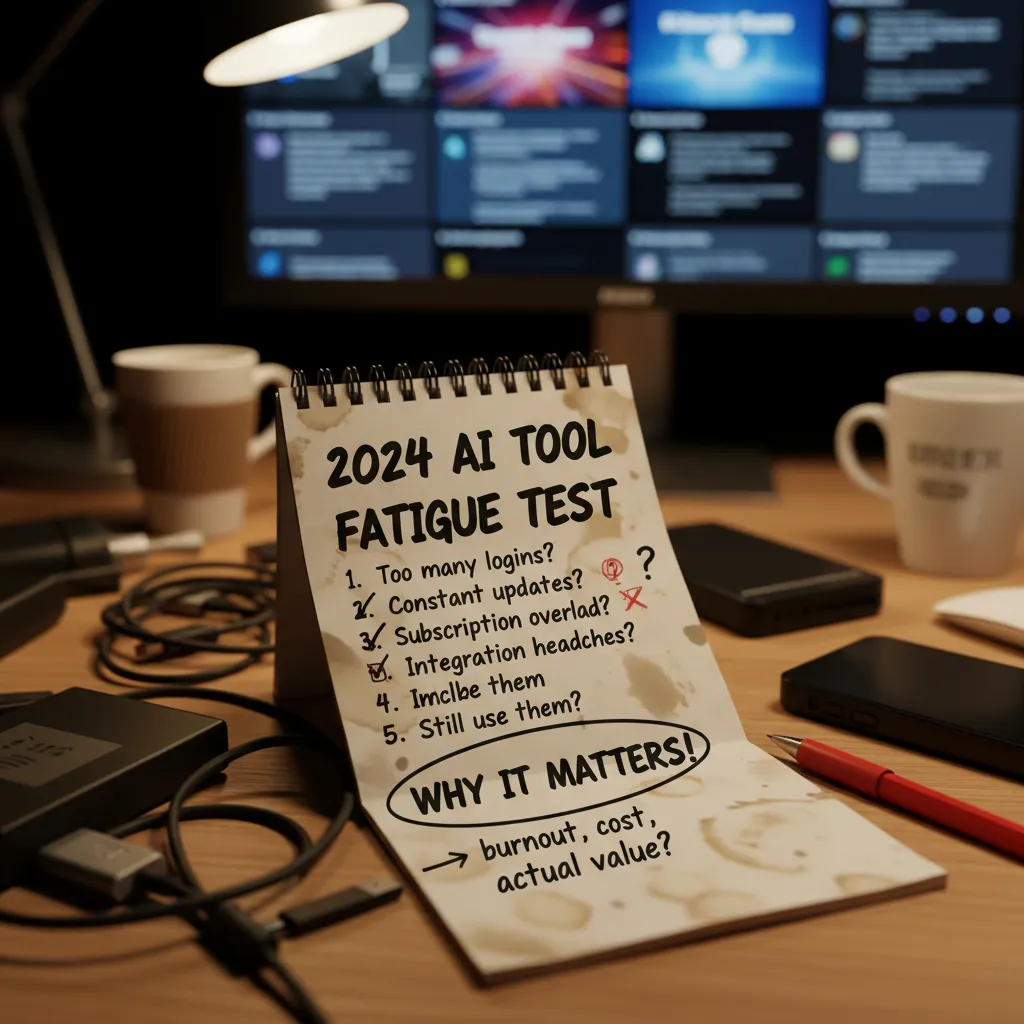
I hit “AI tool fatigue” fast, so I made a rule for AI tools for business: if a tool didn’t save me time twice in a week, it got cut. That one filter exposed the hidden cost—context-switching and “subscription creep” (yes, even with AI productivity tools).
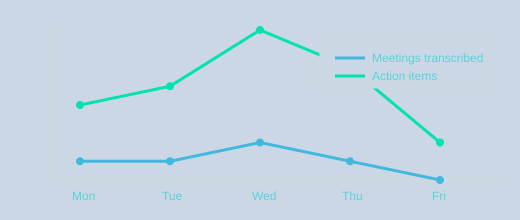
One week, I replaced three recurring tasks (meeting notes, follow-up emails, and a status update) with one prompt + a checklist. On Friday, a messy afternoon meeting became searchable because transcription captured decisions and action items, so I didn’t rewatch anything.
That’s what “dominated” in AI business tools 2024 means to me: tools that stick in real workflows, not just demos. The best AI tools are boring in the best way—quietly dependable.
Satya Nadella: "AI is becoming the new UI—how we interact with software will be reshaped by copilots and natural language."
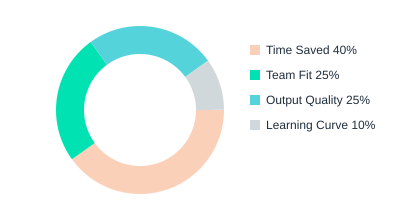
I scored each tool (1–5) on: time saved, adoption by non-technical teammates, output quality, and integrations. I also kept a 10 hours/month benchmark in mind—Microsoft Copilot reports saving employees about 10 hours per month on routine tasks with multimodal features and real-time web access.
| Rubric | Scale | Keep Rule | Benchmark |
|---|---|---|---|
| Time Saved / Learning Curve / Team Fit / ROI Feel | 1–5 | 2+ time-saves/week | 10 hrs/month |
2) The writing-and-thinking engines: ChatGPT + GPT‑4 Turbo
Among the best AI tools I used in 2024, ChatGPT was my daily workflow partner for professional writing content and fast content generation. It shines because the natural language processing feels human, so my drafts don’t read like a brochure.
Where it shined for me
My “second brain” use case was simple: I pasted messy meeting notes and asked for an action plan plus clean follow-up emails. I even rewrote a proposal on a train—then realized I forgot to attach the PDF. Human flaw aside, the draft was solid.
How I kept quality high
- Reusable brief template (goal, audience, constraints, examples)
- One extra “tone check” pass before sending
ChatGPT vs GPT‑4 Turbo for AI tools for businesses
I treat ChatGPT as the interface and habit. GPT‑4 Turbo is the capacity layer inside business apps—built for scalable customer service automation, marketing, and coding support, with over 1,000,000 business users by Sep 2024.
Ethan Mollick: "The real advantage comes from pairing AI with clear goals and careful checking—it's less magic and more management."
Reality check: you still need a human editor (annoying, but true).
Prompts I reuse: “Write an executive summary…”, “Create a competitive comparison…”, “Draft a customer FAQ…”
| Metric | Value |
|---|---|
| GPT‑4 Turbo business users (Sep 2024) | 1,000,000+ |
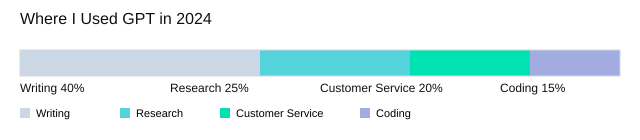
| Writing | 40% |
| Research synthesis | 25% |
| Customer replies | 20% |
| Coding assist | 15% |
3) The everyday co-worker: Microsoft Copilot as an AI productivity tool
Among AI productivity tools, Microsoft Copilot felt like the unglamorous win: the routine work that quietly disappears—email summaries, first drafts, and quick analysis inside Word, Outlook, and PowerPoint. Unlike standalone chat, this is one of the best AI tools because it’s embedded where I already work, which boosts operational efficiency without extra steps.
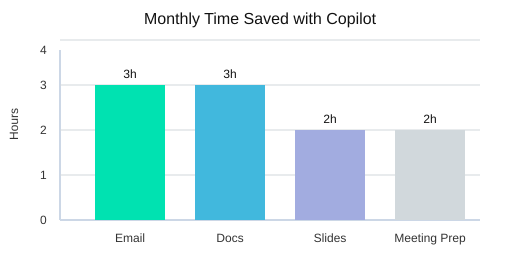
Microsoft reports Copilot saves employees 10 hours per month on routine tasks, helped by multimodal skills and real-time web access.[2] I tracked one month and landed close to that:
| Task | Hours saved/month |
|---|---|
| 3 | |
| Docs | 3 |
| Slides | 2 |
| Meeting prep | 2 |
My favorite pattern is “draft, then argue with it”. I ask Copilot to draft, then I challenge it: “What’s missing?” “What would a skeptic say?” It becomes a sparring partner for AI tools for business writing and decision notes.
Multimodal moments matter: I can pull context from docs and the web to speed up choices. I explained it to a skeptical teammate as “a co-worker who reads fast,” and they later became the power user.
Where it didn’t help: messy source docs still produce messy results. Also, “Copilot” is a perfect name—until it confidently suggests the wrong chart.
Jensen Huang: "AI is the new electricity—every industry will be transformed by it."
4) Meetings that stop evaporating: Otter AI for meeting transcription analysis
I started using Otter AI because I got tired of hearing, “What did we decide again?” Otter is one of those AI tools for businesses that simply removes fog: it handles real-time transcription and meeting analysis for productivity, so decisions don’t vanish.
Real-time notes that turn talk into tasks
During a product meeting, someone casually mentioned a deadline shift. Nobody reacted—except Otter. The transcript captured the exact sentence, and the highlight saved us from building the wrong timeline. That was the moment it paid for itself: one searchable line prevented rework.
My workflow (fast and repeatable)
- Transcript
- Summary
- Action items
- Email follow-up draft in ChatGPT/Copilot
This meeting transcription analysis loop is one of my favorite AI productivity tools for better operational efficiency.
| Weekly output (example) | Result |
|---|---|
| Meetings transcribed | 5 |
| Summaries | 5 |
| Action items captured | 25 |
| Rework avoided | ~2 hours/week |
Sensitive calls: my basic hygiene
- Ask consent:
“I’m turning on transcription so we don’t miss decisions—OK?” - Don’t record confidential segments; redact before sharing.
Cal Newport: "Clarity about what matters provides clarity about what does not."
Bonus: I reuse cleaned transcripts as training data for better prompts—carefully, and only when allowed.
5) Visuals that sell: Midjourney + the ‘image generation’ workflow
Midjourney surprised me most with image generation for brands: I can build brand mood boards in minutes, not days. It dominated 2024 because teams needed faster creative iterations, and it delivers AI-driven Image Generation for commercial realistic and artistic visuals.[1] Debbie Millman said, "Design is the silent ambassador of your brand." I felt that every time a landing page looked “right” faster.
My Image Generation workflow (and the reality check)
Prompts feel like giving directions to a talented but literal intern: clear inputs get great outputs; vague inputs get chaos. The commercial reality: style consistency takes practice, plus a folder system. I also keep lightweight governance: prompt logs for repeatability across campaigns.
- Brief (10 min) → Image Generation goals + do/don’t list
- Generate (15 min) → 20 fast variations
- Select (10 min) → 3 finalists
- Polish (25 min) → light human edits → 1 shipped
Where it fits in AI tools for businesses
- Marketing content, ads, and social
- Landing pages and product mockups
- Internal decks and sales enablement
- Weird but useful: generate anti-examples to clarify what we don’t want
| Step | Time |
|---|---|
| Brief | 10 min |
| Generate | 15 min |
| Select | 10 min |
| Polish | 25 min |
| Total | 60 min |
Variations: 20 initial images → 3 finalists → 1 shipped. This is why it’s among the best AI tools for content generation.


6) When you need a voice (but not a studio): MurfAI for voiceovers generation
Voiceovers Generation for the use case I didn’t expect
I started using MurfAI for quick product walkthrough narrations. It’s one of those AI tools for business that removes friction: I can draft a script, generate audio, and drop it into my deck or demo without booking a studio slot.
Customization that actually matters
The win is control—tone, pacing, and pronunciation tweaks. Human aside: I spent 12 minutes arguing with the pronunciation of a client’s name; the client noticed—in a good way. That level of detail keeps the voiceover supporting the message, not performing it.
Cost sanity check + time saved
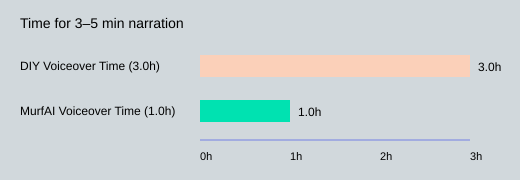
MurfAI offers realistic customizable voiceovers, with paid plans starting at $23/month. For small teams, that’s budget-friendly compared to scheduling talent. I routinely save about 2 hours per short video versus booking a live recording, which means faster enablement and less calendar time.
| Metric | Value |
|---|---|
| MurfAI starting price | $23/month |
| Production time saved | ~2 hours per short video |
Ann Handley: "Good content isn't about good storytelling. It's about telling a true story well."
Pairing idea for AI productivity tools
- Voiceover + screen recording = fast internal training
- Optional next step: light video creation editing to polish
7) The sales follow-up machine: Conversica + AI powered chatbots
In 2024, I saw AI powered chatbots and Conversica win because they never forget to follow up. Conversica uses AI virtual assistants for lead qualification, meeting scheduling, and sales follow-up, turning messy outreach into repeatable sales automation. As Aaron Ross said:
"Predictable revenue comes from a system, not heroics."
Why I’d deploy it first
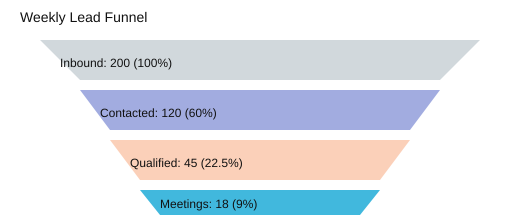
I’d start with high-volume inbound forms and webinar leads. Example weekly funnel:
| Stage | Leads |
|---|---|
| Inbound | 200 |
| Contacted | 120 |
| Qualified | 45 |
| Meetings booked | 18 |
Cadence + setup checklist (keep it human)
| Touchpoint | Timing |
|---|---|
| 1 | Day 0 |
| 2 | Day 2 |
| 3 | Day 5 |
- Handoff rules: escalate when intent is high or questions get complex.
- Tone: short, helpful, and specific to the lead source.
- Boundaries: stop after 3 touches unless the lead replies.
- Disclosure: be honest it’s an assistant.
Mini cautionary tale + wild-card scenario
Once, a lead got three follow-ups in one day from overlapping sequences—fix it with clear ownership rules in your lead management system. Wild-card: when your bot talks to someone else’s bot, I set escalation triggers so a human steps in fast—these are business development tools, not replacements for judgment.
8) Sales intelligence platform smackdown: Salesintel vs Salesforce Einstein
If you’re scaling outbound, I’ve learned one rule: better data beats more data. A strong sales intelligence platform plus smart sales automation keeps reps focused on real buyers, not busywork.
Salesintel: firmographics + predictive analytics
Salesintel shines when I need clean firmographics and predictive analytics to tighten targeting and improve win rates.[3] It’s best when my team lives in multiple tools and wants data quality first.
Salesforce Einstein: CRM-native intelligence
Einstein wins when Salesforce is the center of my stack. Its predictive lead scoring, opportunity insights, and automated data entry make the CRM feel less like a chore.[4] In one deal review, Einstein flagged a weak stage assumption—no recent activity—so I reset the forecast and saved the meeting from false confidence.
The underrated feature: Automated Data Entry
- Automated Data Entry: my least favorite task, finally solved
- Sales Automation pairs well with Email Tracking Notifications in most stacks
| Score (1–5) | Salesintel | Salesforce Einstein |
|---|---|---|
| Data Quality | 5 | 4 |
| CRM Fit | 3 | 5 |
| Time-to-Value | 4 | 4 |
| Automation Depth | 4 | 5 |
Illustrative: with 30 opportunities/month, I’ve seen ~20% move stages due to better insights.
Marc Benioff: "The business of business is improving the state of the world."
<svg viewBox="0 0 420 300" xmlns="http://www.w3.org/2000/svg">
<rect width="420" height="300" fill="#CCD7E6"/>
<g transform="translate(210,150)">
<polygon points="0,-110 110,0 0,110 -110,0" fill="none" stroke="#D1D8DC" stroke-width="2"/>
<line x1="0" y1="0" x2="0" y2="-120" stroke="#D1D8DC"/>
<line x1="0" y1="0" x2="120" y2="0" stroke="#D1D8DC"/>
<line x1="0" y1="0" x2="0" y2="120" stroke="#D1D8DC"/>
<line x1="0" y1="0" x2="-120" y2="0" stroke="#D1D8DC"/>
<text x="-40" y="-130" font-size="12">Data Quality</text>
<text x="125" y="5" font-size="12">CRM Fit</text>
<text x="-35" y="145" font-size="12">Time-to-Value</text>
<text x="-190" y="5" font-size="12">Automation Depth</text>
<polygon points="0,-120 72,0 0,96 -96,0" fill="#00E2B1" fill-opacity="0.35" stroke="#00E2B1" stroke-width="2"/>
<polygon points="0,-96 120,0 0,96 -120,0" fill="#41B8DD" fill-opacity="0.25" stroke="#41B8DD" stroke-width="2"/>
</g>
<rect x="20" y="20" width="12" height="12" fill="#00E2B1"/><text x="38" y="30" font-size="12">Salesintel</text>
<rect x="20" y="40" width="12" height="12" fill="#41B8DD"/><text x="38" y="50" font-size="12">Salesforce Einstein</text>
</svg>
9) Serious forecasting (without the crystal ball): IBM Watson Studio & predictive analytics
When spreadsheets stop working, I usually hear the same questions: “What will next month look like?”, “Who’s about to leave?”, and “Are we pricing this right?” That’s where IBM Watson Studio feels like the grown-up option—a lab bench for data teams to build, test, and ship machine learning models with real Machine Learning Capabilities and Predictive Analytics.
IBM Watson’s cognitive computing is built for business outcomes like sales forecasting, customer churn prediction, and pricing optimization—not just dashboards.
Andrew Ng: “AI is the new electricity.”
How I’d pilot it (small, fast, trusted)
- One narrow model (e.g., churn risk).
- One dataset (clean, agreed definitions).
- One decision to improve (who gets a retention offer).
I once watched a team debate a churn model while ignoring that cancellations were logged differently in two systems. The model wasn’t the problem—trust in the inputs was.
Example pilot plan & KPIs
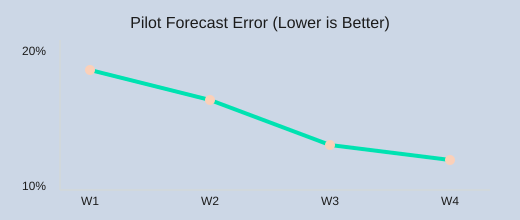
| Week | Focus | KPI |
|---|---|---|
| 1 | Data | Forecast error 18% |
| 2 | Baseline | Forecast error 16% |
| 3 | Model | Forecast error 13% |
| 4 | Rollout | Forecast error 12% |
| Churn flagged accounts: 60/month; Pricing tests: 3/month | ||
10) My ‘rebuild the stack’ checklist for 2025 (closing thoughts)
My 10-tool shortlist from AI business tools 2024 fits four jobs-to-be-done: create (writing, design, video), decide (analytics, forecasting), sell (CRM add-ons, sales intel), and automate (Copilot-style assistants, transcription, workflow bots). The pattern I saw matches the research: AI tools for businesses that plug into existing workflows get adopted faster than standalone experiments.
Clayton Christensen: "The questions we ask determine the answers we find."
Here’s my 30-day rollout so I don’t create chaos, and so I actually improve operational efficiency.
| Days | Plan |
|---|---|
| 1–7 | Pick pilots |
| 8–14 | Train + templates |
| 15–21 | Integrate |
| 22–30 | Measure + decide |
Budgeting in plain English: I pay for the bottleneck, not the trend. My stack mix is 50% productivity, 30% revenue, 20% creative—because speed without sales is noise.
<svg xmlns="http://www.w3.org/2000/svg" width="360" height="220" viewBox="0 0 360 220"><text x="180" y="24" text-anchor="middle" font-family="Arial" font-size="16">My 2025 Allocation</text><g transform="translate(120,120)"><path d="M0,0 L90,0 A90,90 0 0,1 -90,0 Z" fill="#D1D8DC"/><path d="M0,0 L-90,0 A90,90 0 0,1 -27.81,-85.60 Z" fill="#00E2B1"/><path d="M0,0 L-27.81,-85.60 A90,90 0 0,1 90,0 Z" fill="#CCD7E6"/></g><text x="250" y="90" font-family="Arial" font-size="12">Productivity 50%</text><text x="250" y="110" font-family="Arial" font-size="12">Revenue 30%</text><text x="250" y="130" font-family="Arial" font-size="12">Creative 20%</text></svg>
My wild-card analogy: AI tools are kitchen knives—buy fewer, keep them sharp. Maturity path: Solo → Team → Department, and only then add Watson-level tooling for governance and scale. The tool that surprised me most was transcription, because it quietly turns meetings into searchable decisions. Looking ahead to Best AI Tools 2025, what dominated 2024 wasn’t intelligence; it was adoption—dominance equals behavior change, not features. Stop collecting, start committing.
TL;DR: If you only pick a few AI tools for businesses in 2024: use ChatGPT / GPT‑4 Turbo for professional writing content and workflows, Microsoft Copilot for everyday productivity, Otter AI for meeting transcription analysis, Midjourney for image generation, and one sales brain (Salesforce Einstein or a sales intelligence platform like Salesintel). Round it out with MurfAI for voiceovers generation, Synthesia-style video creation editing, Conversica for AI powered chatbots in lead follow-up, and IBM Watson Studio for serious predictive analytics.


Comments
Post a Comment