Future of Work: AI Reshaping HR in 2025
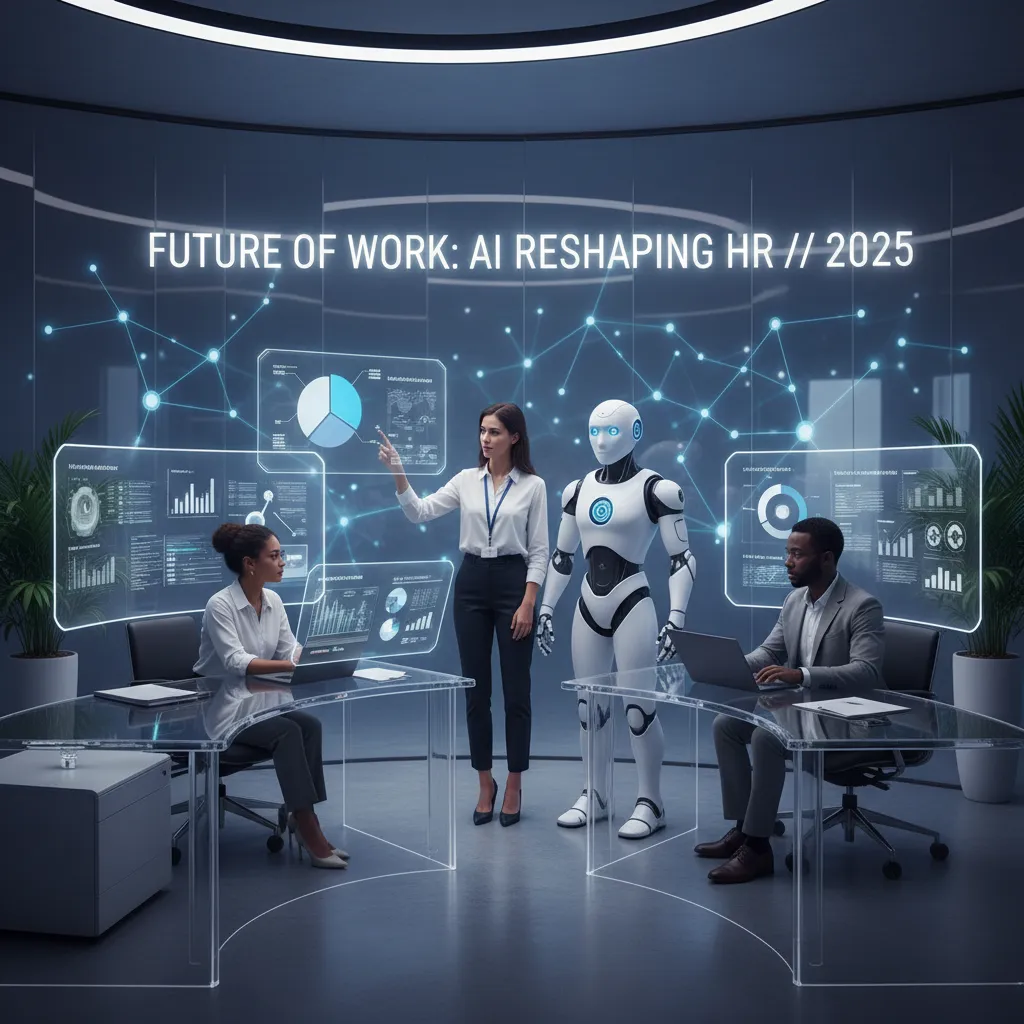
Last spring I sat in a windowless meeting room watching our recruiting team argue with a dashboard. The dashboard was “confident” a candidate would churn in six months. The hiring manager was confident the opposite. I remember thinking: this is the future of work, and it’s weirdly emotional. In 2025, AI isn’t just a shiny add-on in HR—it’s a coworker, a referee, and occasionally a troublemaker. This post is my attempt to make sense of what’s actually changing (and what’s just marketing), using real trend data and the messy moments HR teams don’t always admit out loud.
HR Trends to Watch in 2025 (and why I stopped rolling my eyes)
I used to roll my eyes at “new HR trends” because many were just old tools with a fresh label. My quick gut-check in 2025 is simple: does AI change the decision, or does it only speed up the same workflow? If it’s only faster scheduling, faster screening, or faster reporting, that’s often just renamed automation. If it helps people make better choices—who to hire, how to grow, when to intervene—then I pay attention.
Four transformative trends shaping HR in 2025
- Personalization at scale
AI is moving HR from “one policy fits all” to tailored support. Think role-based onboarding, benefits nudges, and manager coaching that adapts to team needs. The win is not fancy dashboards; it’s fewer missed moments.
- Learning that fits the workday
Instead of long courses, AI recommends short learning based on real tasks—like a prompt that appears when someone writes a performance note or starts a new project. I’m watching for learning that improves output, not just completion rates.
- Agentic AI in HR ops
This is where AI doesn’t just suggest—it acts with guardrails: drafting job posts, scheduling interviews, summarizing feedback, and opening tickets. I treat it like a junior coordinator: helpful, but it still needs review.
- Budget acceleration
Spending is shifting from “nice-to-have tools” to AI that proves value fast. The pressure is on to show impact in weeks, not quarters.
A short tangent: the day “AI-first” became a vibe
I noticed “AI-first” turning into a mood—like adding AI to every slide—rather than a strategy. Strategy is boring on purpose: clear use cases, data rules, human review, and a plan for bias and privacy.
What I’ll measure this year
- Retention: who stays, who leaves, and why
- Time-to-hire: speed and quality of hire
- Internal mobility: moves, promotions, skill matches
- Stress signals: workload patterns, burnout risk, absence trends
“If AI makes HR faster but not kinder or smarter, it’s not progress—it’s just speed.”
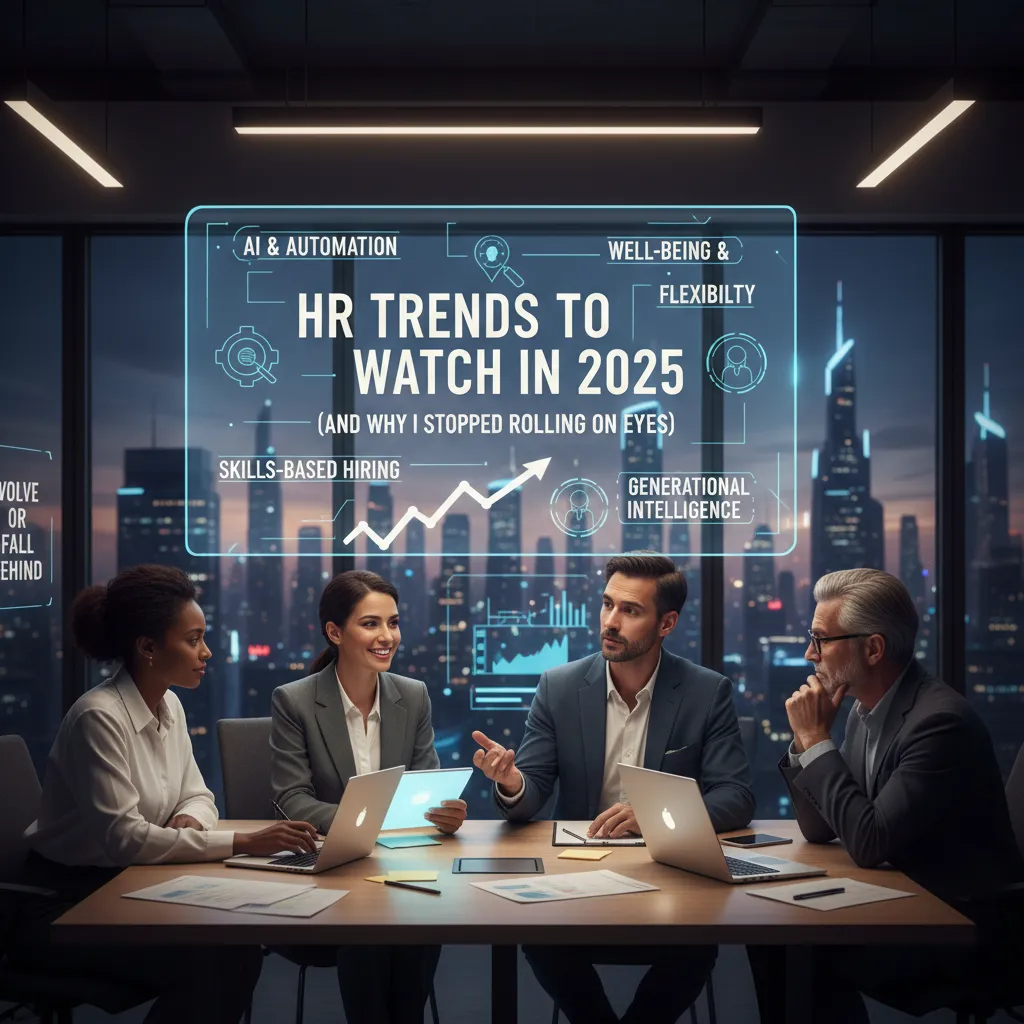
Hyper-Personalized Employee Experiences: the good, the creepy, the useful
Rise of hyper-personalized experiences (beyond perks)
In 2025, AI is pushing employee experience past “pick your perks.” Personalization now means the work itself adapts: how updates reach me, when I get support, and what learning shows up at the right time. It’s not Spotify-for-benefits; it’s a smarter system that tries to reduce friction in my day without turning my job into a constant experiment.
Employee experience AI in practice: pulse + sentiment
The most common setup I see is short pulse surveys paired with sentiment analysis on open comments. Done well, it helps HR spot patterns early: burnout risk in one team, confusion after a policy change, or a manager who needs support. Done poorly, it feels like “we’re reading your mind.” I prefer clear rules: what data is used, how it’s grouped, and what actions will follow.
Personalized wellness nudges (and what I refuse to track)
AI-driven wellness programs can send gentle nudges: take a break after long meetings, use focus time blocks, or suggest EAP resources when stress signals rise. But I draw a hard line on privacy. I refuse to track:
- Private messages or personal email content
- Medical details beyond what an employee chooses to share
- Location data outside work needs
- Off-hours activity as a “productivity” proxy
Personalization should feel like support, not surveillance.
Real-time insights for development: “next best move”
Where AI shines is growth. Based on skills, projects, and goals, it can suggest a “next best move”: a stretch task, a mentor match, or a short course. I like when it explains why it made the suggestion and lets me opt out. Transparency matters more than fancy recommendations.
Tailored leadership coaching: AI helps, humans handle hard talks
An AI coach can help managers prep: draft feedback, role-play a tough conversation, or flag biased language. But it can’t replace accountability. When performance is slipping or trust is broken, a human still has to show up, listen, and make the call.
Continuous Learning Workforce: training is the bottleneck I didn’t expect
When I started using AI tools in HR, I thought hiring speed or policy updates would be the hard part. Instead, training became the bottleneck I didn’t expect. A Continuous Learning Workforce isn’t a slogan; it’s a risk-control strategy. If people can’t learn fast enough, AI-driven change turns into errors, burnout, and uneven performance.
Only 50% have adequate training—what that looks like on a random Tuesday
“Only 50% of workers have access to adequate training opportunities” sounds like a report line until you see it in daily work. On a random Tuesday, it looks like:
- A manager asks for a new AI-assisted workflow, but no one knows the basics.
- One team member becomes the “unofficial trainer,” losing focus time every week.
- People avoid new tools because they fear looking slow or confused.
The risk isn’t just lower output. It’s inconsistent decisions, compliance mistakes, and a growing gap between teams.
Personalized learning paths: skills taxonomy standards that map real roles
Generic courses don’t help much. What works is a skills-based approach: I map roles using skills taxonomy standards (a shared list of skills and levels). Then AI can recommend learning that matches the job people actually do, not a vague title.
| Role task | Skill | Learning focus |
|---|---|---|
| Write job posts | Prompting | Clear inputs, bias checks |
| Screen candidates | Data judgment | Signal vs. noise |
AI skills gap identification: finding gaps without shaming people
I use AI to spot gaps through work signals (project data, tool usage, self-assessments), but I avoid “gotcha” dashboards. The goal is support, not ranking. I frame it as:
“We’re measuring the system, not blaming the person.”
Increased demand for training: my two-hour-a-week rule (and why managers hate it)
My rule of thumb is two hours a week for learning—protected time. Managers hate it because it feels like lost capacity. I see it as preventing bigger losses later. I even block it on calendars as:
LEARNING_TIME = 2 hours/week
Rise of Agentic AI: from ChatGPT to meaningful, autonomous help
What makes agentic AI different (and why it worries HR)
When I talk about AI in HR, many people think of ChatGPT-style chatbots that answer questions or draft text. Agentic AI is different because it can take actions, not just respond. It can follow steps, use tools, and complete a task end to end. That is also why it scares some HR teams: if an AI can act, it can also act wrong unless we set clear limits, approvals, and audit trails.
From drafting emails to running workflows
In 2025, the real shift is using AI to run workflows inside HR, not just write messages. Instead of “write a follow-up email,” an agent can: check the ATS stage, find open interview slots, send options to the candidate, update the record, and notify the recruiter. This is where AI becomes meaningful help—less busywork, fewer handoffs, and faster cycle time.
Where I’d start (and where I wouldn’t)
If I were rolling out agentic AI, I would start with low-risk, high-volume tasks:
- Candidate scheduling with rules (time zones, interviewer availability, buffers)
- HR FAQs like policy lookups, benefits basics, and “how do I” requests
- Document routing for onboarding forms and reminders
Where I would not start: terminations, performance decisions, or anything that changes pay or employment status. Those need human judgment, context, and empathy.
How agentic features show up in HRIS and ATS tools
Agentic AI is increasingly built into enterprise software. In an HRIS or ATS, it may appear as:
- “Next best action” prompts for recruiters and HR partners
- Auto-updating fields based on emails, calendars, and forms
- Workflow bots that open tickets, assign owners, and track SLAs
Ethical automation with escalation paths
I treat autonomy like a ladder: the more impact on a person, the more human review is required. I also require:
- Clear boundaries (what the AI can and cannot do)
- Escalation to a human when confidence is low or risk is high
- Logs so we can audit decisions and fix issues
“Automate the process, not the responsibility.”
HR's AI spending accelerating: budgets, buyers, and the awkward ROI conversation
In 2025, I’m seeing AI move from “nice to test” to “must fund.” The big change is that CFOs suddenly care about HR tech because labor costs are the largest line item, and AI promises measurable savings and better decisions. When hiring slows or turnover rises, finance wants proof that HR tools reduce time, errors, and risk—not just improve the employee experience.
Why CFOs are watching HR tech spend
AI tools now touch recruiting, onboarding, learning, and workforce planning. That makes HR systems part of the company’s operating model. I also notice CFOs asking tougher questions about vendor contracts, data access, and whether we’re paying twice for similar features across platforms.
If 55% are increasing spend, here’s how I’d place the first dollars
With 55% of companies increasing HR tech spend, I’d prioritize use cases that remove repeat work and reduce compliance exposure:
- Recruiting operations: screening support, interview scheduling, and candidate Q&A
- HR service delivery: AI helpdesk for policies, benefits, and case routing
- Workforce insights: attrition signals and skills gaps (with human review)
The AI HR tech market could triple by 2030—what “triple” changes
When a market is expected to triple, vendors race to bundle features, and procurement gets stricter. I expect more security reviews, more demand for clear pricing, and more pressure to prove that AI features are real—not just rebranded automation.
Generative AI adoption: governance and the “shadow HR” problem
Generative AI spreads fast because it’s easy to try. That creates shadow HR: teams using unsanctioned tools to rewrite job ads, summarize performance notes, or draft employee messages. I push for simple rules on data privacy, approved tools, and logging.
A quick ROI sketch: efficiency vs. quality vs. risk
| ROI lens | What I track |
|---|---|
| Efficiency | hours saved, cycle time, cost per hire |
| Quality | candidate experience, manager satisfaction, retention |
| Risk | privacy incidents, bias flags, audit findings |
AI fluency becomes baseline: the new HR muscle (and my own learning curve)
In 2025, I see AI fluency becoming as basic for HR as knowing how to run a structured interview. By the end of 2025, I expect every HR pro to understand what AI can (and cannot) do, ask better questions of AI tools, and spot when a “smart” output is actually a risky guess. This isn’t about becoming a data scientist. It’s about being confident enough to use AI without handing over judgment.
The mismatch in the market (and why it matters)
One stat keeps bothering me: demand for AI skills in HR job postings is up 66% YoY, yet only 2% list AI as a requirement. To me, that gap signals two things: companies want AI outcomes, but they’re not updating role design; and candidates don’t know what to learn because expectations are vague. The result is messy adoption—tools get bought, but teams don’t change how they work.
What “AI fluency” looks like in daily HR work
- Prompting generative AI tools: writing clear inputs, adding context, and asking for structured outputs (tables, rubrics, drafts).
- Interpreting algorithmic recommendations: treating scores as signals, not truth, and checking what data the model likely used.
- Ethical automation decisions: knowing what should never be fully automated (e.g., final hiring decisions) and documenting human review.
Here’s a simple prompt format I use when I need consistency:
Role: HRBP. Task: draft interview questions. Constraints: skills-based, bias-aware. Output: 8 questions + scoring rubric.
HR teams are diversifying on purpose
I’m also seeing HR teams hire from data analytics, product management, and technology. That mix helps HR move from “process owners” to “system designers,” especially when AI touches recruiting, learning, and performance.
Wild card: my “AI literacy lunch” that failed twice
I tried running an “AI literacy lunch” to upskill my team. The first two sessions flopped—too theoretical, and people were afraid to ask “basic” questions. The third worked when I made it hands-on: one real HR task, one shared prompt, and a rule that we critique the output together.
AI doesn’t replace HR judgment. It exposes whether we have any.
Building the Human-Centric Workplace (so AI doesn’t quietly wreck morale)
In 2025, I’m seeing a hard truth in HR: AI tools don’t automatically create productivity. Many teams buy software, announce “AI-first,” and then wonder why work feels heavier. Rollouts often go wrong in two ways. First is performative usage, where people paste prompts into a tool just to look modern, not to solve real problems. Second is tool sprawl, where five overlapping apps fight for attention, create new steps, and quietly drain morale.
AI-first policies that lower stress, not raise it
When I help leaders set AI-first policies, I push for simple guardrails that make work calmer. Employees need clarity on what AI can and cannot do, what data is allowed, and who is accountable when the output is wrong. I also recommend “no-surprise automation”: if AI changes a workflow, people should know when it happens, why it happens, and how to override it. That reduces fear and stops the feeling of being managed by a black box.
Emotional intelligence leadership in human-machine teams
Human-machine collaboration fails when we turn people into metrics. Yes, AI can summarize performance notes or spot patterns, but leaders still need emotional intelligence: listening, context, and fairness. I treat AI insights as a starting point, not a verdict. If the workplace feels like constant scoring, trust drops fast—and trust is the real productivity engine.
Candidate engagement: transparency builds trust
In AI-driven recruitment, I aim for clear candidate engagement journeys. I tell candidates when AI is used (screening, scheduling, interview notes), what it evaluates, and how humans make final decisions. Transparency doesn’t slow hiring; it protects the employer brand and reduces anxiety.
My simple rule for HR in 2025: automate the boring, humanize the scary, and audit everything else.
If we follow that rule, AI supports people instead of replacing dignity. That’s how we build a human-centric workplace—and keep morale strong while the future of work arrives.
TL;DR: In 2025, AI is reshaping HR through hyper-personalized employee experiences, a push toward continuous learning, the rise of agentic AI, and rapidly growing HR tech investment—while “AI-first” policies can still hurt productivity if rolled out performatively. Build AI fluency, measure outcomes, and protect a human-centric workplace culture.


Comments
Post a Comment