Future of AI in Talent Acquisition (2026+)

I still remember the first time I watched an ATS auto-reject a candidate I’d actually interviewed—and liked. The system wasn’t “wrong,” exactly; it was just confident in a way that didn’t leave room for context. That moment stuck with me, because it hints at the next chapter: not just recruitment automation, but AI agents making hundreds of tiny decisions that add up to who gets hired. In this post, I’m looking ahead to what Talent Acquisition might feel like in 2026—messy, faster, more personalized, and (if we do it right) more human where it counts.
1) AI-Driven Trends: When AI Agents Run the Workflow
My “inbox experiment” made the shift obvious
When I think about the future of AI in talent acquisition (2026+), I don’t start with big predictions—I start with my inbox. I ran a simple “inbox experiment” and tracked one work week: how many messages were real recruiting work, and how many were pure coordination. The result surprised me. A large chunk of my time was spent on scheduling loops, reminder nudges, status updates, and “just checking in” follow-ups. None of that required my judgment. It required consistency, speed, and perfect memory. In other words, a bot could do it better.
Agentic AI is not just automation—it’s orchestration
Traditional recruitment automation helps with single tasks. Agentic AI is different because it can run the workflow end-to-end, like a capable coordinator who never drops a thread. In practical terms, an AI agent can connect the steps and keep them moving without me pushing every button.
- Sourcing: scanning profiles, matching skills, and building shortlists based on role needs
- Screening: sending structured questions, scoring responses, and flagging risks or gaps
- Scheduling: finding overlap, booking panels, handling time zones, and rescheduling fast
- Follow-ups: sending updates, collecting feedback, and keeping candidates warm
What changes is the rhythm of recruiting. Instead of me managing every handoff, the AI agent manages the handoffs and asks for my input only when it matters. I see this as the next step in AI in talent acquisition: less “tool use,” more “workflow ownership.”
What stays human (and why it matters)
Even if AI agents run most of the process, I still want humans in the moments that carry weight:
- High-stakes judgment calls: trade-offs, potential, and team fit are not checkbox decisions
- Relationship repair: when a candidate feels ignored or a process goes wrong, empathy matters
- Storytelling: explaining why this role matters and why the company is worth joining
My best recruiting moments are not “efficient.” They’re human.
Small tangent: I’m oddly relieved when a machine sends the calendar invite. It removes friction and lets me focus on the conversation—the part that actually builds trust.

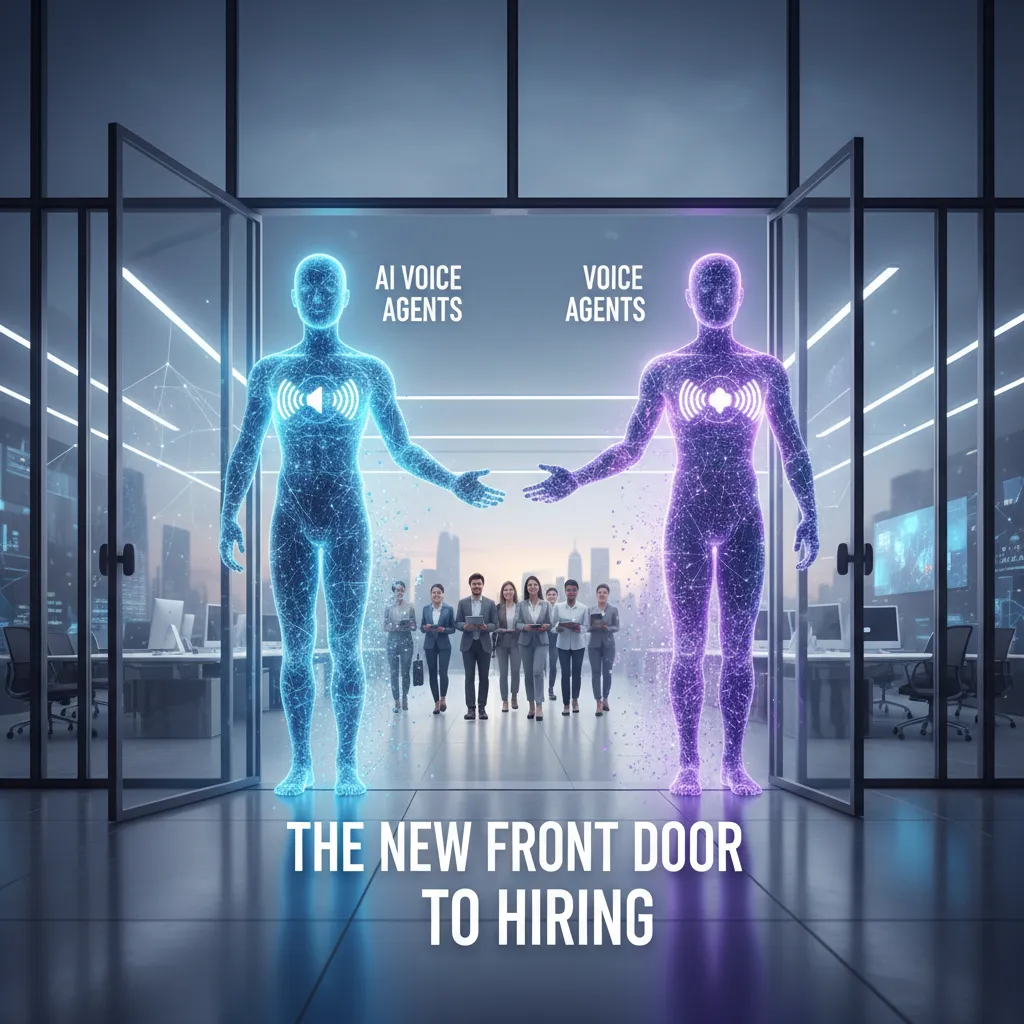
2) AI Voice Agents & Voice Agents: The New Front Door to Hiring
In 2026 and beyond, I expect AI voice agents to become the new front door to hiring. Instead of forcing people into a long form at midnight, a candidate can simply talk to a voice agent during a commute. They can say, “I’m interested in the customer support role,” and the system can guide them step by step, hands-free, in plain language.
A simple hypothetical: applying while commuting
I picture a candidate on a train, earbuds in, with five minutes to spare. They speak naturally, answer a few questions, and get a clear next step. No password resets. No broken links. No “upload your resume” loop. That kind of low-friction experience is where the future of AI in talent acquisition gets real for everyday people.
Where AI voice helps (when used well)
Voice agents can handle the repetitive parts of recruiting with speed and consistency, while freeing recruiters to focus on human conversations that actually matter.
- Screening questions: role basics like availability, work authorization, location, shift needs, and salary range.
- Rescheduling: “Can we move my interview to Thursday?” without email back-and-forth.
- Reminders: interview confirmations, document checklists, and day-of directions.
- Accessibility support: voice-first options for candidates who struggle with forms, small screens, or typing; plus multilingual prompts when available.
Risks I worry about: voice bias and awkward moments
My biggest concern is voice bias. Accents, speech patterns, tone, and even background noise can affect transcription quality and how responses are interpreted. If the model “hears” one candidate better than another, we can accidentally create unfair screening. I also worry about the awkwardness of “talking to a hiring system.” Some candidates may feel watched, judged, or unsure what is being recorded.
My rule of thumb: voice should reduce friction, not replace empathy.
How I’d keep it candidate-friendly
- Always offer a choice: voice, chat, or form—no forced channel.
- Be transparent: explain what is recorded, how it’s used, and how long it’s stored.
- Design for fairness: test across accents and environments; allow “repeat” and “edit” options.
- Escalate to humans fast: when a candidate asks for help or the conversation gets sensitive.
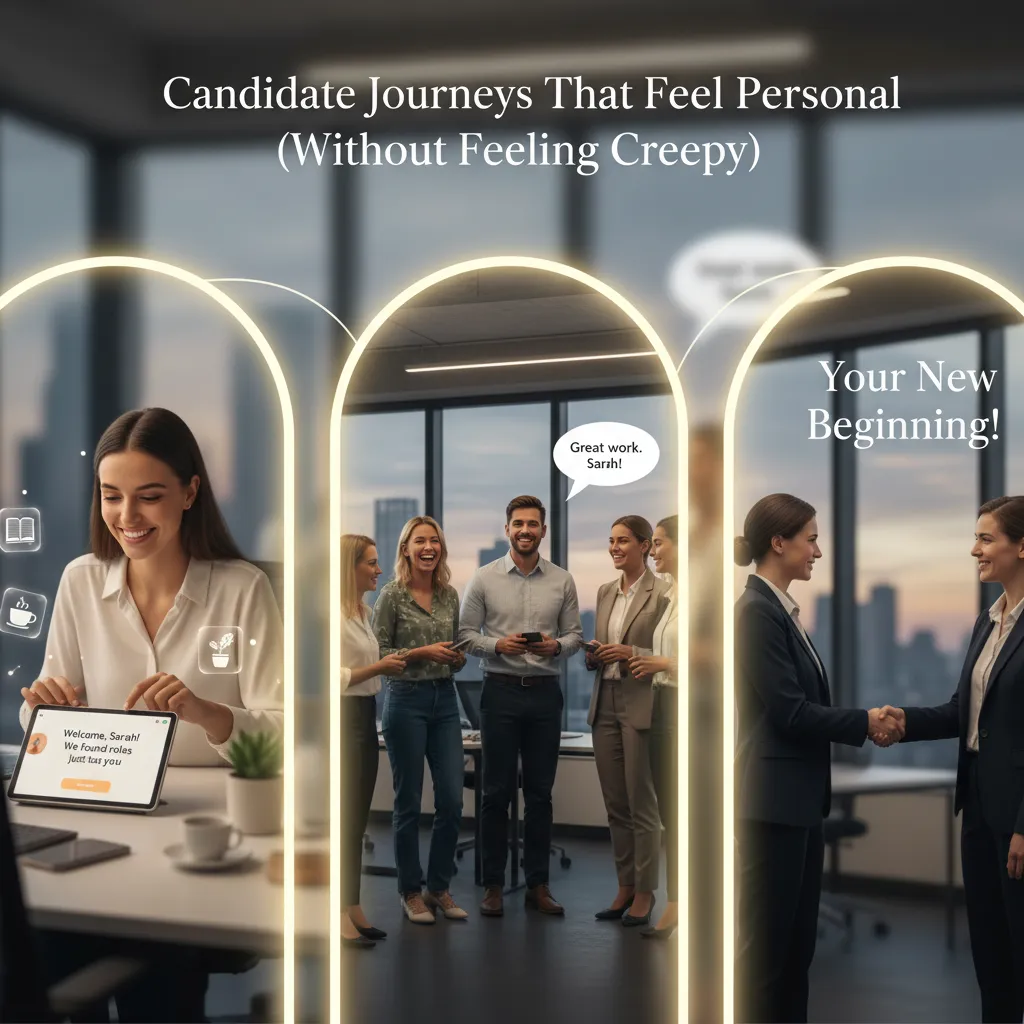
3) Candidate Journeys That Feel Personal (Without Feeling Creepy)
When I think about the future of AI in talent acquisition (2026+), I don’t picture robots “selling” jobs. I picture smoother candidate journeys that feel helpful, human, and respectful. The goal is simple: make every step clearer and faster without making people feel watched.
Personalized journeys done right
In my experience, good personalization is role-relevant and easy to understand. It supports candidates instead of pushing them.
- Role-relevant nudges: “Here are two projects our top analysts usually share” beats generic “complete your profile.”
- Realistic timelines: AI can set honest expectations like “review takes 5–7 business days,” based on real workflow data.
- Clear next steps: Candidates should always know what happens next, what they need to do, and when they’ll hear back.
Personalized journeys done wrong (no thanks)
Bad personalization has that “we saw you left our careers page” energy. It feels like surveillance, even if it’s technically allowed. I avoid anything that implies we tracked someone across the web or guessed private details.
Personalization should feel like good service, not like being followed around a store.
Multimodal AI as the backstage crew
What excites me most is multimodal AI working quietly in the background. Instead of relying only on resumes, it can read skills signals across formats—like portfolios, writing samples, Git repos, certifications, and short video intros—then match them to the role in a more complete way. Done well, this reduces friction: fewer forms, fewer repeated questions, and better-fit interview invites.
My mini-checklist: the three Cs
Before I “personalize” anything, I run a quick check. If I can’t meet these, I scale it back.
- Consent: Did the candidate opt in, and can they opt out easily?
- Clarity: Can I explain what data we used and why in plain language?
- Control: Can the candidate edit preferences, pause messages, or choose channels?
In 2026 and beyond, AI recruiting tools will be powerful. The best teams will use that power to create journeys that feel personal because they’re useful—not because they’re intrusive.
4) Skill-Based Hiring Meets Predictive Modeling (And My Mild Skepticism)
In the future of AI in talent acquisition (2026+), I expect two trends to keep merging: skill-based hiring and predictive modeling. Skill-based hiring is exploding for a simple reason—resumes are noisy. Titles vary by company, job descriptions are inflated, and career paths are rarely straight lines. Skills signals travel better across industries because they describe what a person can actually do, not just where they worked.
Why skills are winning over resumes
When I look at modern hiring workflows, skills are easier to test, easier to compare, and easier to update. A resume might say “data analyst,” but skills can show SQL, dashboarding, and stakeholder communication. That’s more useful for matching people to roles, especially as jobs keep changing.
- Resumes are inconsistent across regions, industries, and seniority levels.
- Skills are portable, so candidates can move between roles faster.
- Skills can be verified through work samples, assessments, and structured interviews.
Where predictive modeling shows up
Predictive analytics is becoming the “quiet engine” behind many AI recruiting tools. Common use cases I see gaining traction include:
- Retention forecasting: estimating who might stay 6–18 months based on role fit, manager patterns, and past mobility data.
- Quality-of-hire signals: combining early performance indicators, ramp time, and team outcomes to spot what “good” looks like.
- Internal mobility recommendations: suggesting next roles or projects based on skills adjacency and learning velocity.
My mild skepticism: prediction isn’t destiny
Here’s my concern: models learn from history, and history includes bias. If last year’s promotions favored certain schools, titles, or networks, a model can turn that into tomorrow’s “insight.” That’s how a prediction becomes a self-fulfilling rule.
“A model can be accurate and still be unfair—because it may be accurately repeating the past.”
A practical compromise I can live with
I’m not anti-prediction. I’m pro-context. My compromise is to use predictive modeling to ask better questions, not to end conversations. If a model flags retention risk, I want it to trigger a deeper check: role clarity, manager fit, growth path, and compensation alignment. In other words, let AI guide the interview—not replace judgment.
5) The Recruitment Team in 2026: Hybrid Teams, New Muscle Memory
By 2026, I expect the recruitment team to look less like a line of “recruiters + coordinator” and more like a hybrid crew where humans and AI share the workload. The biggest shift is not that AI replaces recruiters—it’s that AI becomes a daily teammate, and we build new habits to manage it.
The new org chart: recruiters + AI agents + workflow owners
In the future of AI in talent acquisition, I see three roles becoming standard:
- Recruiters: relationship builders, interview partners, and decision support for hiring managers.
- AI agents: sourcing, outreach drafts, screening summaries, scheduling, and “next best action” suggestions.
- Ops-minded workflow owners: people who design the process, set rules, monitor quality, and keep systems connected.
That last role matters because AI works best when the workflow is clear. Someone has to own the “how” of recruiting, not just the “who.”
What I’d train for: prompt hygiene, audit trails, and human escalation
If I were training a 2026 recruitment team, I’d focus on three skills that feel like new muscle memory:
- Prompt hygiene: writing clear instructions, using approved templates, and avoiding sensitive data in prompts.
- Audit trails: keeping records of what the AI did, what data it used, and why a decision was made.
- Human escalation scripts: knowing when to step in—fast—and what to say when a candidate needs a real person.
“AI should handle the repeatable work. Humans should handle the meaningful moments.”
Even a simple escalation script helps: “Thanks for flagging this. I’m stepping in personally to review your situation and will follow up by [time].”
SMBs aren’t left out
I don’t think advanced AI recruiting will be limited to big companies. SMBs may adopt faster because they feel the pain sooner: fewer recruiters, more roles to fill, and less time for manual tasks. With the right setup, a small team can run a strong pipeline using AI for sourcing, screening support, and scheduling—while keeping humans in control of final calls.
A quick reality check: tools don’t fix broken processes
One warning I keep repeating: AI won’t fix a messy hiring process. If your intake is unclear, your interview steps are inconsistent, or your feedback is late, AI may only speed up the chaos. Before adding more automation, I’d map the workflow, define decision points, and set quality checks—then let AI scale what already works.
6) Workforce Planning & HR Systems: The Unsexy Foundation (That Decides Everything)
If there’s one lesson I learned the hard way, it’s this: if your HR data is messy, AI just makes the mess louder—ask me how I know. In talent acquisition, we love shiny tools that promise faster hiring, better matching, and smarter outreach. But when job titles are inconsistent, requisition reasons are missing, and candidate stages mean different things to different recruiters, AI can’t “fix” it. It simply scales the confusion, and the output looks confident even when it’s wrong.
AI Workforce Planning Starts With Better Inputs
When the foundation is solid, AI in talent acquisition becomes a real planning advantage. I use AI for workforce planning in three practical ways: scenario planning (what happens if we freeze hiring, open a new region, or lose a key leader?), talent pressure signals (where we’re likely to face skill shortages or pay pressure), and pipeline forecasting (how many qualified candidates we can realistically move from sourced to hired within a time window). This is where the future of AI in talent acquisition (2026+) gets real: not just filling roles, but predicting bottlenecks before they hit.
Integration: ATS + HRIS + Assessments + CRM (Or It Falls Apart)
Most teams don’t have an “AI problem.” They have a systems problem. Your ATS holds stages and notes, your HRIS holds employee history and org structure, assessment tools hold skills signals, and your CRM holds relationships and campaigns. If those systems don’t talk, your AI will make decisions with partial context. The fix is not another dashboard—it’s workflow orchestration that stitches data and actions together so the right information shows up at the right moment, for the right person.
My Boring but Effective Recommendation
My most effective move is also the least exciting: start with a data dictionary and a single source of truth. Define what each field means (and who owns it), standardize job families and skills, and lock down stage definitions. Once that’s in place, AI can support recruiting automation, improve forecasting, and help leaders make clearer decisions. In 2026 and beyond, the winners won’t be the teams with the flashiest AI—they’ll be the teams with clean data, connected systems, and a plan they can trust.
TL;DR: AI agents and voice assistants will run much of the transactional recruiting work by 2026, enabling hyper-personalized candidate journeys, skill-based hiring, and better workforce planning—if TA teams build strong HR data foundations and clear AI oversight.


Comments
Post a Comment