5 AI Trends Reshaping Business Operations 2025
I still remember the week our support team handed me a printed log of customer interactions because the 'AI' was still 'experimental.' Fast-forward to 2025: AI agents are taking action, models reason across data types, and boards ask about custom silicon budgets. In this post I walk through five trends I think will change how companies actually run — not just their marketing copy — and I’ll share odd personal observations, a couple of head-scratching failures, and practical takeaways.
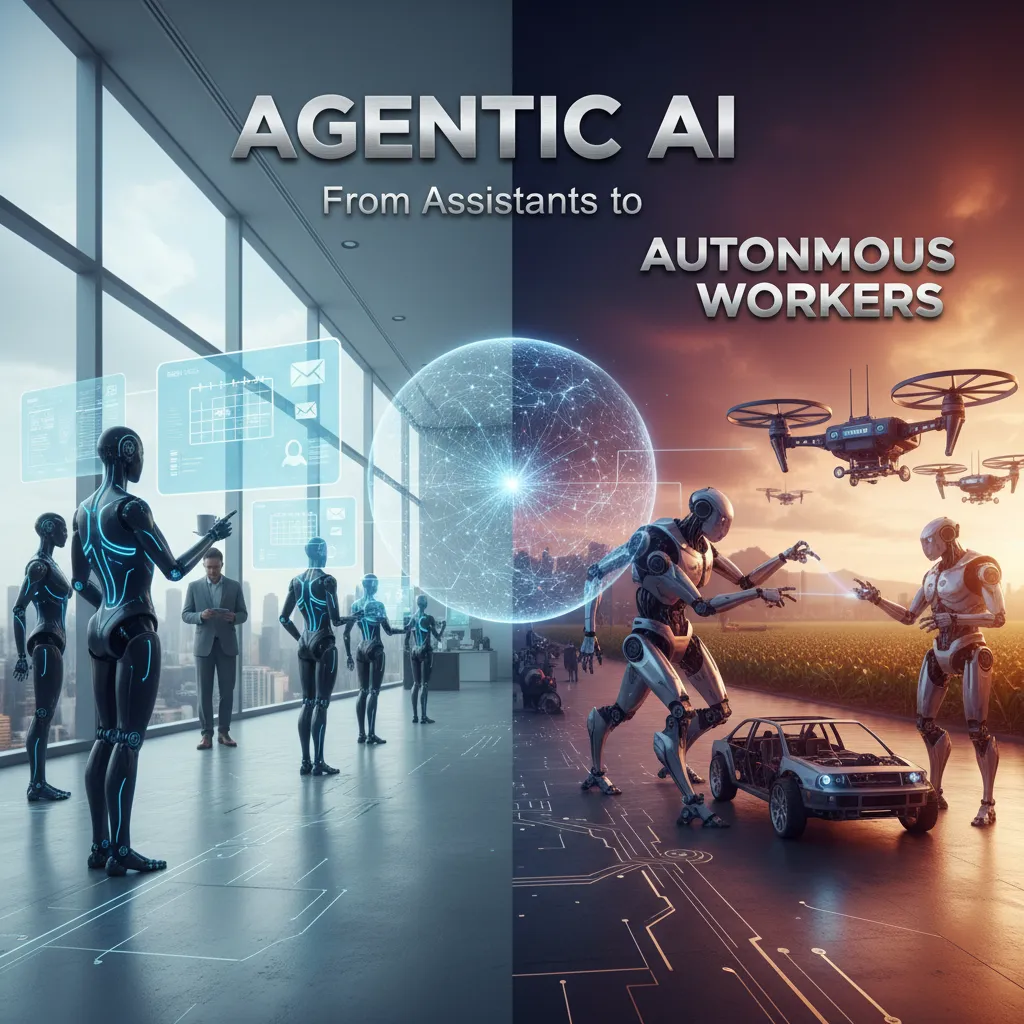
1) Agentic AI: From Assistants to Autonomous Workers
When most teams say they “use AI,” they often mean a task-specific chatbot: something that answers questions, drafts emails, or summarizes documents. That’s helpful, but it still leaves the real work—decisions, approvals, and execution—in human hands. Agentic AI is different. I think of it as AI that can plan, decide, and act across steps to reach a goal, not just respond to a prompt.
What makes agentic AI different from a chatbot?
A chatbot is usually reactive: I ask, it answers. Agentic AI is proactive: it can notice a situation, choose a next action, and carry it out in connected systems (ERP, CRM, ticketing, email, supplier portals). The key shift is real-world actions, not just text.
- Chatbots: single tasks, human-in-the-loop for execution, limited context.
- Agentic AI: multi-step workflows, tool use, memory/context, and controlled autonomy.
Examples I’m seeing in business operations
Procurement agents are a clear early win. Instead of only flagging low inventory, an agent can check stock levels, confirm approved vendors, compare lead times, and place an order—then log the action and notify the right people. In practice, this reduces the “someone saw the alert, someone emailed purchasing, someone followed up” chain.
Another pattern is agent networks that coordinate demand forecasting. One agent monitors sales velocity, another watches supplier constraints, and another updates production plans. Together, they can propose a revised forecast and trigger downstream tasks like adjusting reorder points or scheduling overtime—still with guardrails and approvals where needed.
In sales operations, I’m seeing AI sales agents that prioritize leads by combining CRM history, intent signals, and recent engagement. Instead of a static score, the agent can recommend next steps, schedule follow-ups, and route leads to the right rep based on capacity and expertise.
A quick story from a pilot
I watched a pilot agent detect that a critical component was trending toward stockout late in the evening. It checked the bill of materials, confirmed the approved substitute wasn’t available, and reordered the original part with expedited shipping. The plant never missed a shift. But it only worked because we had tight guardrails: spending limits, vendor allow-lists, and a required approval step above a certain dollar amount.
“Autonomy is powerful, but in operations, control is the feature—not the limitation.”
Operational benefits I expect in 2025
- Reduced decision latency: fewer delays between signal → decision → action.
- 24/7 execution: agents can monitor and act outside business hours.
- Fewer handoffs: less back-and-forth between teams for routine workflows.
For me, the practical takeaway is simple: agentic AI turns AI from “help me write” into “help me run,” as long as the business sets clear rules, audit trails, and safe boundaries.
2) AI Reasoning & Multimodal Capabilities: Context-Aware Decisions
One of the biggest AI shifts I’m seeing for 2025 is what many teams call the reasoning frontier. In simple terms, AI is moving beyond basic pattern matching (like “this looks similar to past data”) and toward context-aware recommendations that can support planning. Instead of only predicting what might happen, newer systems can help explain why it might happen and suggest what to do next, based on goals, constraints, and real-world signals.
The “reasoning frontier”: from answers to decisions
In business operations, reasoning shows up when AI can connect multiple facts and make a practical recommendation. For example, it can weigh inventory levels, delivery times, and customer priority to propose a shipping plan—not just a forecast. This matters because many operational problems are not “one dataset, one output.” They are messy, changing, and full of trade-offs.
- Context-aware planning: AI can propose steps, not just labels or scores.
- Better handoffs: It can summarize the situation for humans and show the key drivers.
- Fewer blind spots: It can consider constraints like budget, compliance, and capacity.
Multimodal AI: text + images + video (and more)
The second part of this trend is multimodal capability. Multimodal models can work with text, images, video, and sometimes audio or sensor data in one workflow. I find this especially useful for speeding up product development, quality assurance, and customer experience (CX), because teams rarely operate in “text-only” environments.
Here are a few practical ways multimodal AI helps operations:
- Product development: Compare design images with written requirements and flag mismatches.
- QA workflows: Review inspection photos alongside machine logs to spot root causes faster.
- CX workflows: Analyze customer screenshots or short videos with support tickets to reduce back-and-forth.
Example: defect detection with combined signals
Imagine a manufacturing line where a multimodal system reviews sensor logs (temperature, vibration, cycle time) together with camera images of finished parts. The AI notices a small surface defect that appears only when vibration spikes during a specific machine step. Instead of stopping at “defect detected,” it can suggest corrective actions like recalibrating a tool head, adjusting feed rate, or scheduling maintenance based on similar past incidents.
When AI can connect what it “sees” with what the machines “feel,” it becomes much more useful for real operations.
A real-world reminder: test with messy reality
I once watched a model miss a subtle image cue because it hadn’t been trained on that camera angle. The defect was visible to a human, but the AI didn’t recognize it in that specific view. That moment stuck with me: multimodal AI is only as strong as the real-world coverage of its data. If lighting, angles, or sensor calibration change, performance can drop.
For teams adopting AI in 2025, I recommend treating reasoning and multimodal systems like operational tools, not demos: test them on real conditions, track failure cases, and keep improving the data they learn from.

3) Custom Silicon & AI Supercomputing: Hardware Meets Strategy
In 2025, I’m seeing a clear shift: AI strategy is becoming hardware strategy. As more business operations rely on AI for search, support, forecasting, and automation, the real bottleneck is often not the model—it’s the inference cost and speed. That’s why both enterprises and hyperscalers are investing in custom silicon and AI supercomputing stacks built for their exact workloads.
Why specialized chips are winning: speed, cost-per-inference, and security
General-purpose GPUs are powerful, but they can be expensive and sometimes inefficient for always-on production AI. Specialized chips (custom accelerators, inference-focused GPUs, or ASICs) are designed to run common AI operations faster and cheaper.
- Speed: Lower latency means faster customer experiences and quicker internal decisions.
- Cost-per-inference: When you run millions of predictions per day, small savings per request become major budget wins.
- Security: Dedicated infrastructure can reduce exposure by keeping sensitive data and models inside controlled environments.
Reasoning models make inference-heavy workloads the new normal
As AI moves from simple text generation to reasoning models that take more steps to answer, inference becomes heavier. These models may run longer, use more memory, and require more compute per request. In practice, that pushes teams to optimize the full stack: model architecture, quantization, batching, caching, and the hardware underneath.
I often explain it like this:
When AI becomes a daily operational tool, inference is no longer a “cloud line item.” It becomes a core unit cost of the business.
Even small optimizations—like using lower-precision formats or choosing chips tuned for matrix math—can change the economics of AI. That’s why “AI supercomputing” is not only for research labs anymore; it’s becoming a production requirement for companies with high-volume AI workflows.
Example: custom inference cluster impact in a mid-size firm
One mid-size firm I studied moved its heaviest inference workloads (customer chat routing, document classification, and product search ranking) from a general cloud setup to a custom inference cluster using optimized runtimes and inference-focused accelerators. The results were practical, not theoretical:
| Metric | Before | After |
|---|---|---|
| Latency | Baseline | -60% |
| Cloud costs | Baseline | -30% |
They didn’t “buy magic chips” and call it done. They also standardized model serving, improved caching, and used better batching policies—showing that hardware and software must work together.
The imperfection: complexity and lock-in risk
Custom silicon is not a free win. It can add procurement complexity (long lead times, capacity planning, vendor negotiations) and lock-in risk if your models and tooling become too tied to one chip ecosystem. I recommend planning for portability—clear APIs, containerized deployments, and fallback paths—so your AI operations stay flexible even as the hardware gets more specialized.

4) AI-Driven Supply Chains & Digital Twins: Visibility, Not Guesswork
In 2025, I see supply chains moving from “best guesses” to live, data-backed decisions. The shift happens when three AI capabilities work together: AI agents that take action, predictive analytics that forecast what’s next, and digital twins that let teams test changes safely before touching the real world. When these tools converge, delays stop being surprises and start becoming problems we can spot early and fix fast.
How the pieces fit: agents + prediction + twins
Predictive analytics turns messy signals—sales, weather, promotions, supplier lead times—into forecasts. AI agents then use those forecasts to trigger decisions (like reordering, rerouting, or rescheduling). A digital twin ties it together by mirroring the supply chain or factory in a virtual model, so we can simulate outcomes before we commit.
- Predictive analytics answers: “What will demand and risk look like next week?”
- AI agents answer: “What should we do right now, and can we do it automatically?”
- Digital twins answer: “If we change X, what breaks—and what improves?”
Practical examples I’m seeing more often
These aren’t futuristic demos anymore. They’re becoming normal operating tools for teams that want speed and control.
- Real-time demand forecasting: Models update daily (or hourly) as new orders, returns, and market signals come in, reducing stockouts and excess inventory.
- Autonomous rerouting of shipments: When a port delay or weather event hits, AI agents can propose alternate lanes, carriers, or modes—then execute once rules are met.
- Virtual twins simulating plant changes: Before adding a new product variant or changing a line speed, teams run simulations to see impacts on throughput, energy use, and quality.
The opportunity gap is still huge
Here’s the part that stands out to me: only 21% of companies use digital twins, but 97% of those users report significant value. That gap tells me many businesses are still running critical operations without the visibility that competitors are already using to cut bottlenecks and protect margins.
| Metric | What it suggests |
|---|---|
| 21% adoption | Most firms haven’t built a twin-driven operating model yet |
| 97% report value | Those who adopt tend to see clear ROI and better decisions |
A moment that made it real for me
I once sat in a “war room” with operations, quality, and engineering teams watching a digital twin simulation of a planned line change. On paper, the change looked simple: adjust the heating profile to increase output. But the twin showed a thermal issue building up near a sensor cluster, which would have caused uneven curing and a spike in defects. We paused the rollout, changed the airflow and setpoints, and avoided what could have been a costly week of scrap and downtime.
That day, the digital twin didn’t just predict a problem—it gave us a safe place to find the fix.
5) Governance, Adoption & ROI: Making AI Everyone's Job
Why governance is now a board-level AI decision
In 2025, I no longer see AI as a “tool the IT team tries.” I treat it as a strategic AI imperative that needs board-level alignment, because AI changes how decisions get made, how work gets done, and how risk shows up. When leadership is aligned, it becomes easier to fund the right projects, set clear goals, and avoid random pilots that never scale. I recommend an enterprise AI adoption plan that connects AI use cases to business outcomes like faster cycle times, fewer errors, and better customer experience. Just as important, I push for cross-functional ownership, so AI is not “owned” by one department. Operations, legal, security, HR, finance, and frontline teams all have a role in making AI work safely and consistently.
The governance basics that keep AI useful and safe
Good AI governance is not about slowing innovation; it is about making results repeatable. The first element I put in place is a risk framework that classifies AI use cases by impact. Low-risk tasks (like drafting internal summaries) can move fast, while high-risk tasks (like pricing, hiring, or credit decisions) require stronger controls. Next is explainable AI and transparency. If a model influences a decision, I want to know why it recommended something, what data it used, and what limits it has. That clarity builds trust and helps teams catch mistakes early.
Finally, as agentic AI becomes more common, role-based access matters. If an AI agent can send emails, approve refunds, change inventory levels, or trigger payments, it must have permissions that match a human role. I like to define “who can do what” and require logging for agentic actions, so we can audit outcomes and respond quickly if something goes wrong.
Adoption and ROI: the numbers that justify change management
AI adoption is already mainstream. 59% of companies are using AI, and 98% report it creates significant value. I use these numbers to make a simple point: the question is not whether AI will affect our operations, but whether we will manage it on purpose. That is why change management is part of ROI. Training, clear policies, and shared playbooks help people use AI correctly, not just frequently. When teams understand what AI can and cannot do, they make better decisions and waste less time.
A candid aside (and the real conclusion)
I will be honest: governance frameworks can slow pilots at first. Reviews, approvals, and documentation feel like friction when everyone wants quick wins. But I have learned that this early discipline saves reputational damage and compliance costs later. In the long run, the best AI programs are the ones where everyone has a job to do: leaders set direction, teams adopt responsibly, and governance keeps the value real. That is how AI becomes a durable advantage in 2025—measured, trusted, and owned across the business.
TL;DR: Five trends will reshape operations in 2025: agentic AI, AI reasoning plus multimodal models, custom silicon/supercomputing, AI-driven supply chain & digital twins, and enterprise governance & adoption strategies — all tied to clear ROI and risk controls.


Comments
Post a Comment